Projects by country
A parent category for grouping together blogposts on work in specific countries
Reflections: Pivotal Moments in Freetown
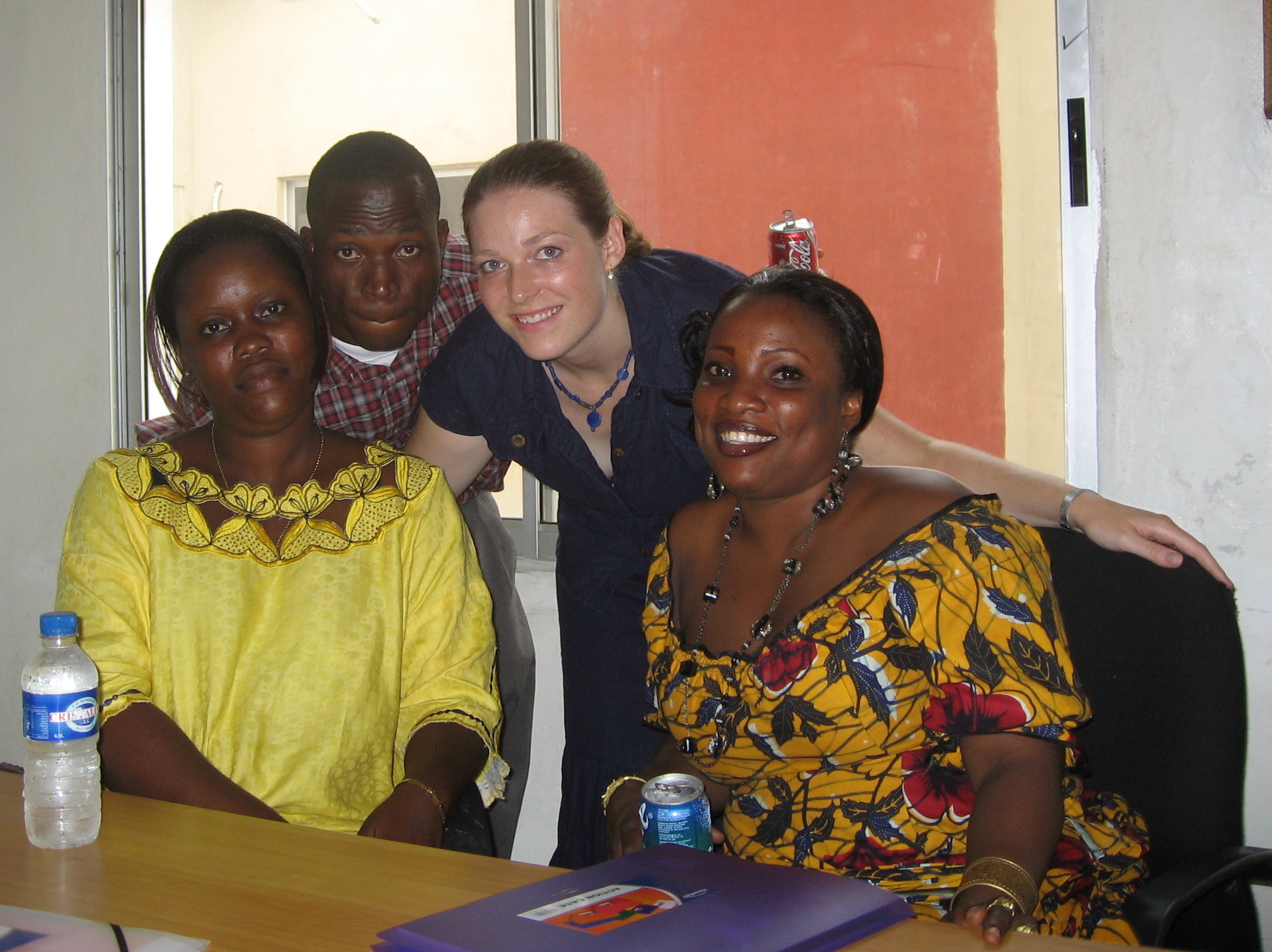
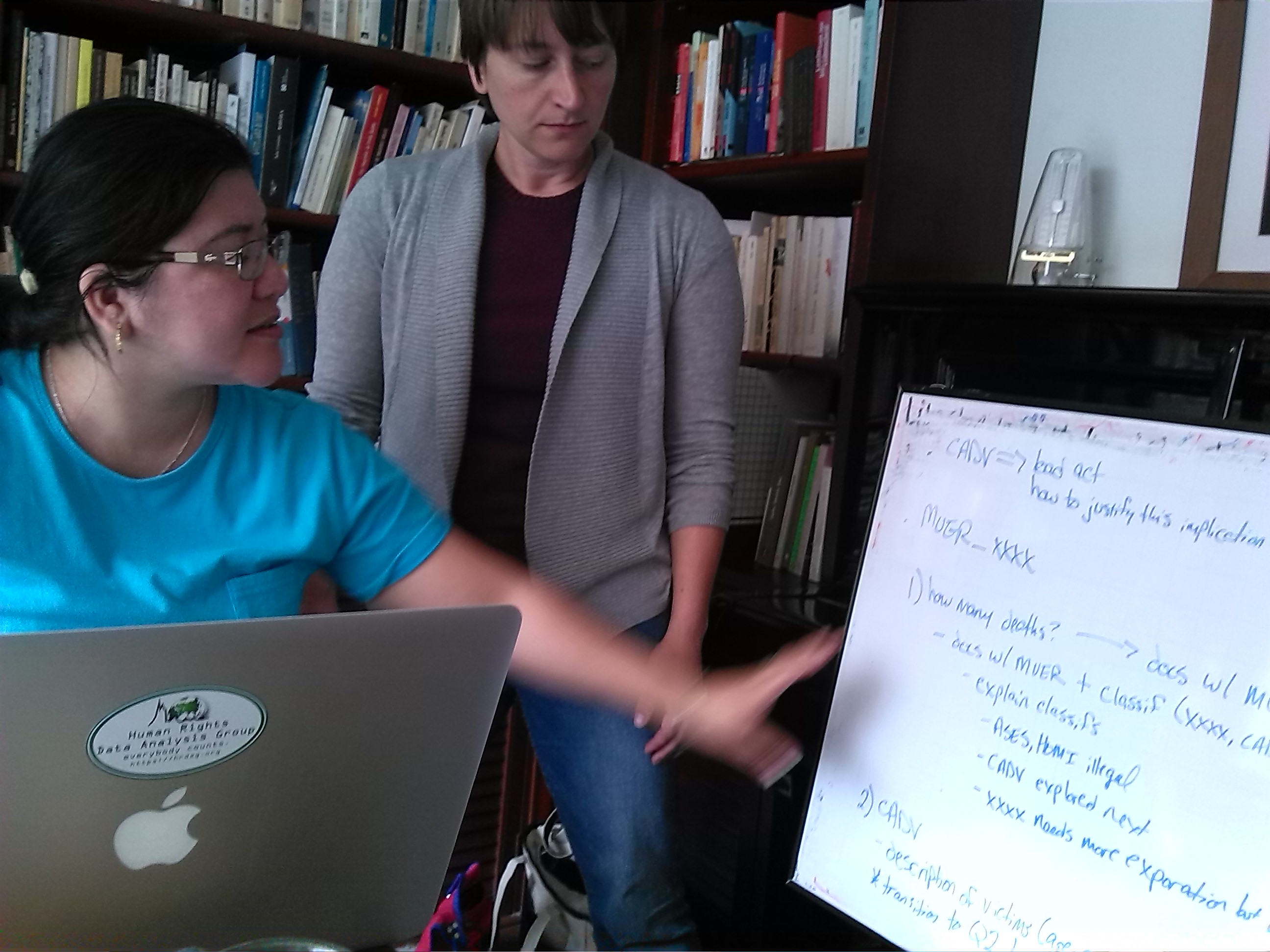
The summer of 2002 in Washington, DC, was steamy and hot, which is how I remember my introduction to HRDAG. I had begun working with them, while they were still at AAAS, in the late spring, learning all about their core concepts: duplicate reporting and MSE, controlled vocabularies, inter-rater reliability, data models and more. The days were long, with a second shift more often than not running late into the evening. In addition to all the learning, I also helped with matching for the Chad project – that is, identifying multiple records of the same violation – back ...
Reflections: A Simple Plan
I got an email from my superheroic PhD adviser in June 2006: Would I be interested in relocating to Palo Alto for six months in order to work with Patrick Ball at the Human Rights Data Analysis Group? (She'd gotten a grant and would cover my stipend.) Since I'd spent the last several months in New Haven wrestling ineffectually with giant, brain-melting methodological problems, I said yes immediately.
The plan with my adviser was simple: I'd digitize the ancient, multiply-photocopied pages of data from the United Nations Truth Commission for El Salvador, combine them ...

Locating Hidden Graves in Mexico
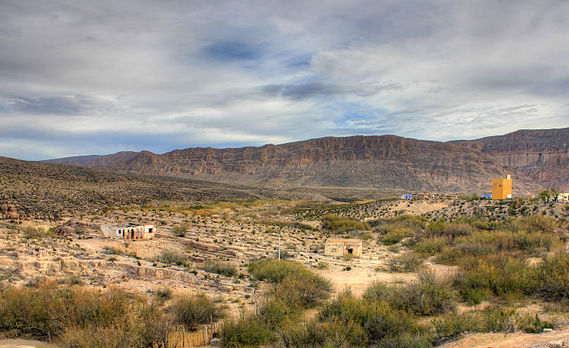
For more than 10 years, and with regularity, Mexican authorities have been discovering mass graves, known as fosas clandestinas, in which hundreds of bodies and piles of bones have been found. The casualties are attributed broadly to the country’s “drug war,” although the motivations and perpetrators behind the mass murders are often unknown.
Recently, HRDAG collaborated with two partners in Mexico—Data Cívica and Programa de Derechos Humanos of the Universidad Iberoamericana—to model the probability of identifying a hidden grave in each county (municipio). ...
Reflections: It Began In Bogotá
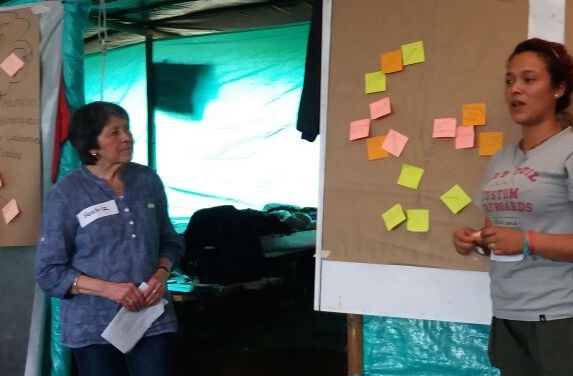
It was July of 2006, I’d spent five years working at a local human rights NGO in Bogotá, and I had reached retirement age. But then a whole new world opened up for me to discover. Tamy Guberek, then HRDAG Latin America coordinator, whom I had met at the NGO, approached me about becoming part of the HRDAG Colombia team as a research/administrative assistant. Over a cup of suitably Colombian coffee, the deal was quickly "signed.” My responsibilities ranged from fundraising to translations, from support in data gathering for estimates on homicides and disappearances ...
Reflections: Growing and Learning in Guatemala
As a woman, mother and sociologist who is curious about the patterns of our political past in Guatemala, I feel privileged to know and work with the HRDAG team. Collaborating and learning from people like Patrick, Megan, Suzanne, Beatriz and Tamy has been an invaluable gift. I have discovered many things, both human and academic. For example, I’ve learned new ways of seeing what seemed everyday and simple, to discover that not only do the social sciences and statistics work hand in hand, but that they are critical for understanding Guatemala’s reality.
Twenty years ...
Judges in Habré Trial Cite HRDAG Analysis
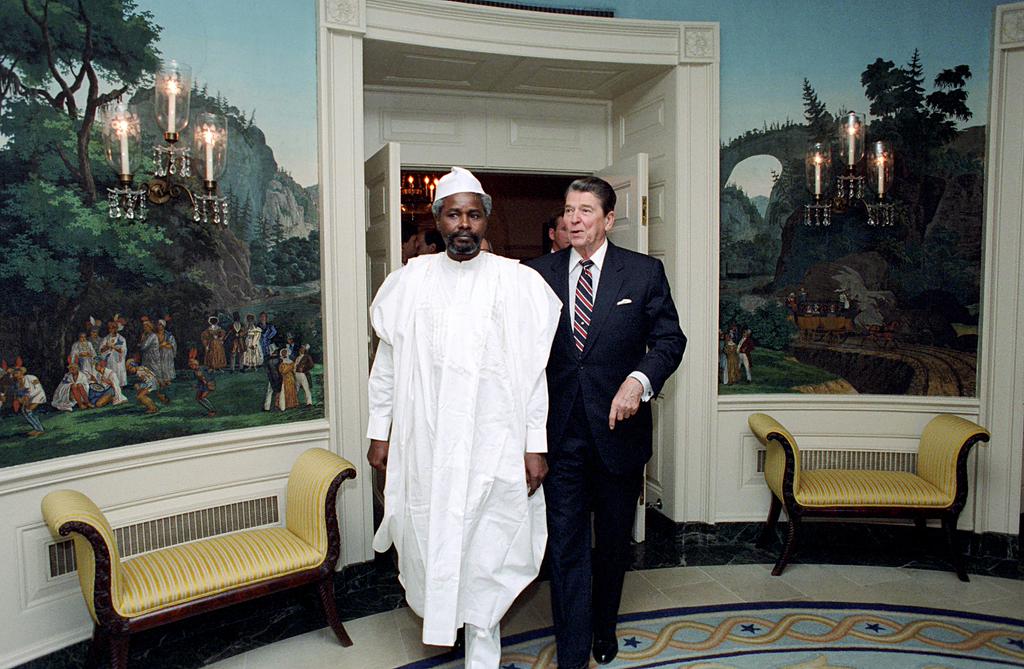
Three months after the announcement of the momentous verdict finding former Chadian president Hissène Habré guilty of crimes against humanity, the presiding judges have released the full, written 681-page judgment of the court. Testimony given by HRDAG’s director of research, Patrick Ball, is mentioned at three points in the verdict.
The judges included in their written judgment the HRDAG analysis that the mortality rate in Habré prisons was staggeringly high—much higher than the mortality rate among the population as a whole. Here’s an excerpt from the ...
HRDAG and Amnesty International: Prison Mortality in Syria
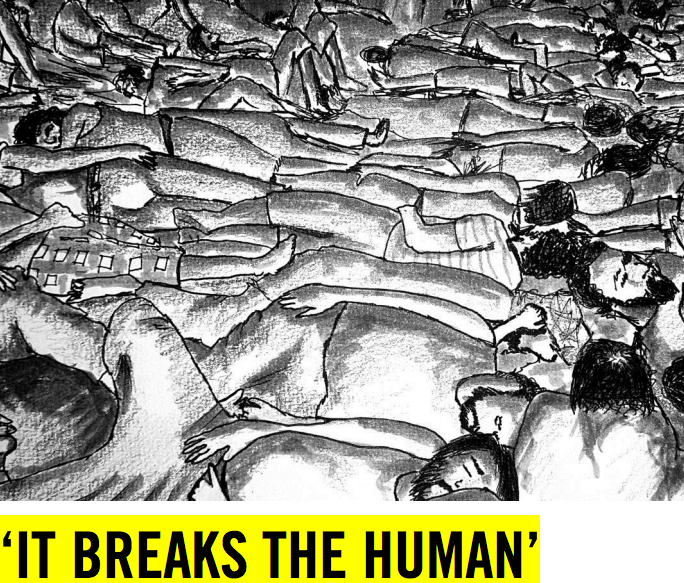
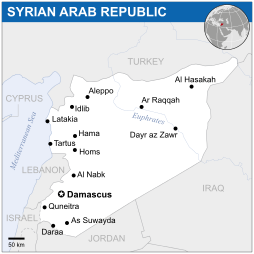
Today Amnesty International released “‘It breaks the human’: Torture, disease and death in Syria’s prisons ,” a report detailing the conditions and mortality in Syrian prisons from 2011 to 2015, including data analysis conducted by HRDAG.
The report provides harrowing accounts of ill treatment of detainees in Syrian prisons since the conflict erupted in March 2011, and publishes HRDAG’s estimate of the number of killings that occurred inside the prisons.
To accompany the report, HRDAG has released a technical memo that explains the methodology, ...
HRDAG and AHPN Launch Book Detailing Collaboration
Earlier this month, HRDAG and the Historic Archive of the National Police (AHPN) of Guatemala launched a book that represents a long-time collaboration between the two organizations. The book, “Una mirada al AHPN a partir de un studio de cuantitativo,” is, as the title states, a look at the Archive’s datasets via a quantitative study. Book authors are HRDAG executive director Megan Price and AHPN colleague Carolina López, with translations by Beatriz Vejarano. The book is available in Spanish and forthcoming in English.
The book explains how HRDAG and the Archive ...
The task is a quantum of workflow
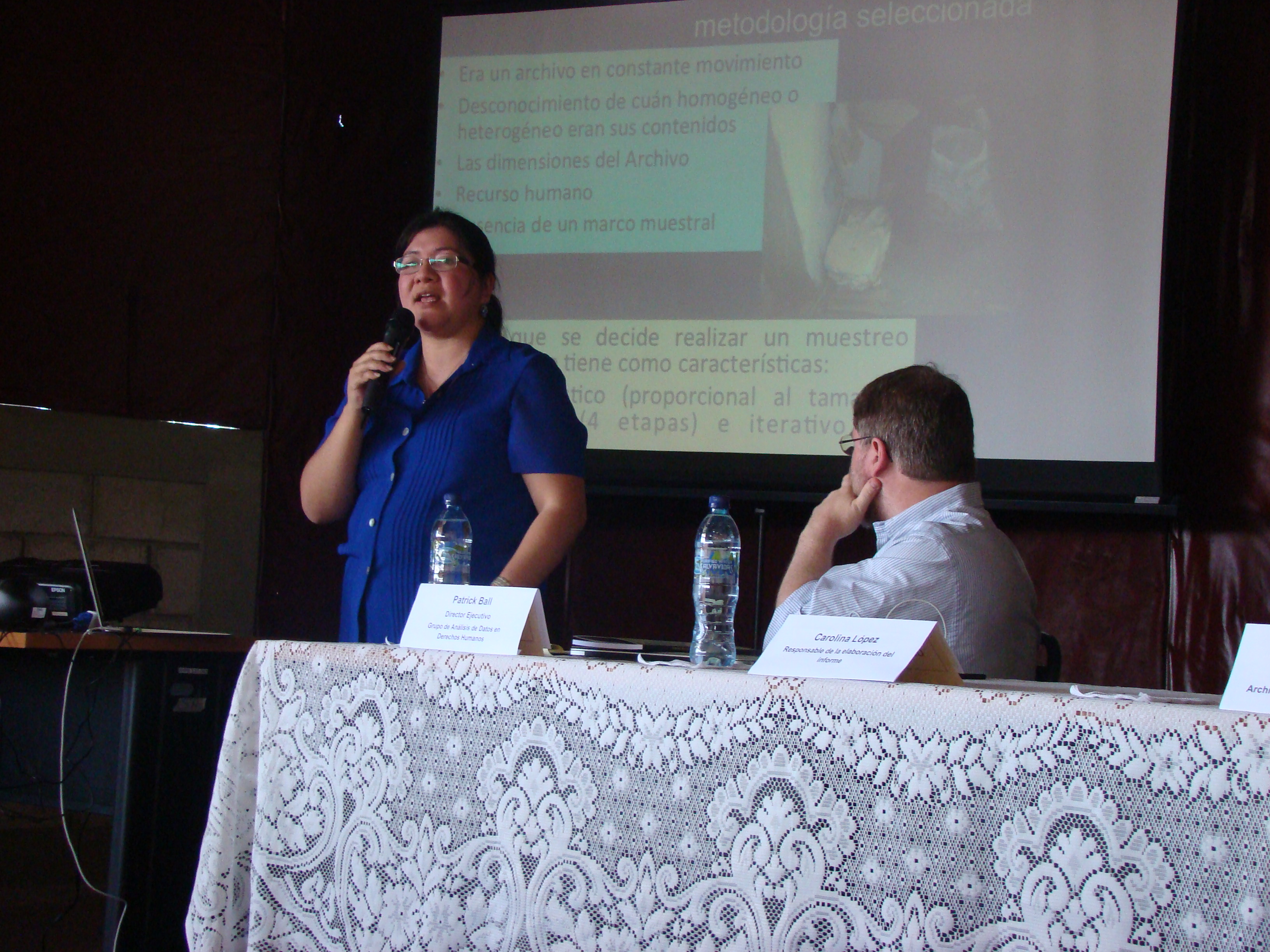
This post describes how we organize our work over ten years, twenty analysts, dozens of countries, and hundreds of projects: we start with a task. A task is a single chunk of work, a quantum of workflow. Each task is self-contained and self-documenting; I'll talk about these ideas at length below. We try to keep each task as small as possible, which makes it easy to understand what the task is doing, and how to test whether the results are correct.
In the example I'll describe here, I'm going to describe work from our Syria database matching project, which ...
Momentous Verdict against Hissène Habré
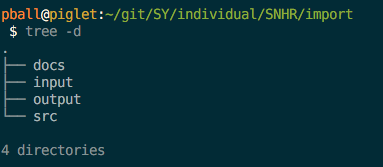
Today we’re very pleased to hear of the verdict finding Hissène Habré guilty of crimes against humanity. Habré, president of Chad from 1982 to 1990, has been sentenced to life in prison in Dakar, Senegal, where he was tried. He is the first former head of state to be tried and found guilty of crimes against humanity in one country (Chad) by the courts of another country (Senegal). Here’s more on the verdict from The Guardian.
The verdict resonates especially with HRDAG because of our role in the trial. In September 2015, director of research Patrick Ball ...
The case of Ana Lucrecia Orellana Stormont
When working with documents in an archive, every document offers the opportunity for statistical study and quantitative research. But a document can also offer the discovery of a story. That is the case with the disappearance of Ana Lucrecia Orellana Stormont, who was reported missing on June 6, 1983, at the age of 35.
Ana Lucrecia, a professor of psychology at the University of San Carlos, was scheduled to attend a meeting with Edgar Raúl Rivas Rodríguez at the Plaza Hotel in Guatemala’s capital city. Edgar, who also went missing, was a teacher at the School of ...

Data Archaeology for Human Rights in Central America: HRDAG Collaborates with UWCHR
Patrick Ball is kicking himself for a decision he made almost 25 years ago. “I was clever, but I wasn’t smart,” he says ruefully, as he considers the labyrinth of tables and ASCII-encoded keystrings he used to design a database of human rights violations for the pioneering Salvadoran non-governmental Human Rights Commission (CDHES). Now I’m sitting in his office in San Francisco’s Mission District watching over his shoulder, and trying to keep up, as he bangs out code to decipher the priceless data contained in these old files. Created in 1991 and 1992, ...
Rapid response to: Civilian deaths from weapons used in the Syrian conflict
On November 4, 2015, the BMJ published our "Rapid Response" to Civilian deaths from weapons used in the Syrian conflict (BMJ 2015;351:h4736). The response was co-authored by Megan Price, Anita Gohdes, Jay Aronson (Carnegie Mellon University, Center for Human Rights Science), and Christopher McNaboe (Carter Center, Syria Conflict Mapping Project).
We have three concerns about this article. First, the article apportions responsibility for casualties to particular perpetrator organizations based on a single snapshot of territorial control that ignores the numerous (and ...
HRDAG Testifies in Hissène Habré Trial
Last week HRDAG’s executive director, Patrick Ball, served as an expert witness for the prosecution in the trial of Hissène Habré, the ruler of Chad from 1982 to 1990. The trial is taking place in Dakar, Senegal, where the 73-year-old Habré has been living since 1990 when he fled Chad. He has already been sentenced to death in absentia in Chad.
Habré is being charged with war crimes, crimes against humanity, and torture that took place during his eight-year reign. The trial is happening at the Extraordinary African Chambers, which was inaugurated by Senegal ...

Analysis of Homicide Patterns in Colombia
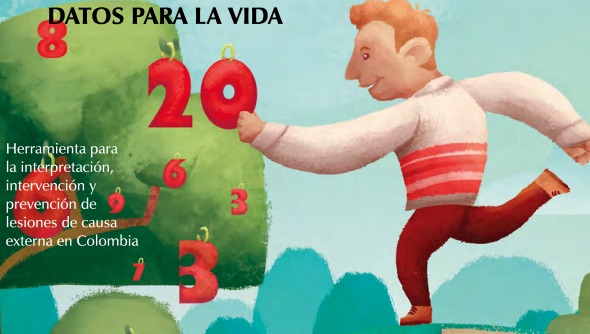
Last week Forensis, the Colombian National Institute of Forensic Medicine’s flagship publication, published the first of our analyses of homicide patterns in Colombia. Authored by HRDAG executive director Patrick Ball and UN colleague Michael Reed Hurtado, “Cuentas y mediciones de la criminalidad y de la violencia” (pages 529-545) explores, as the title suggests, the quality of “truth” contained within crime registries. Citing the problem of partial data, missing data, and inherent design bias, Patrick and Michael write that no register, official or unofficial, ...
Ten Years and Counting in Guatemala
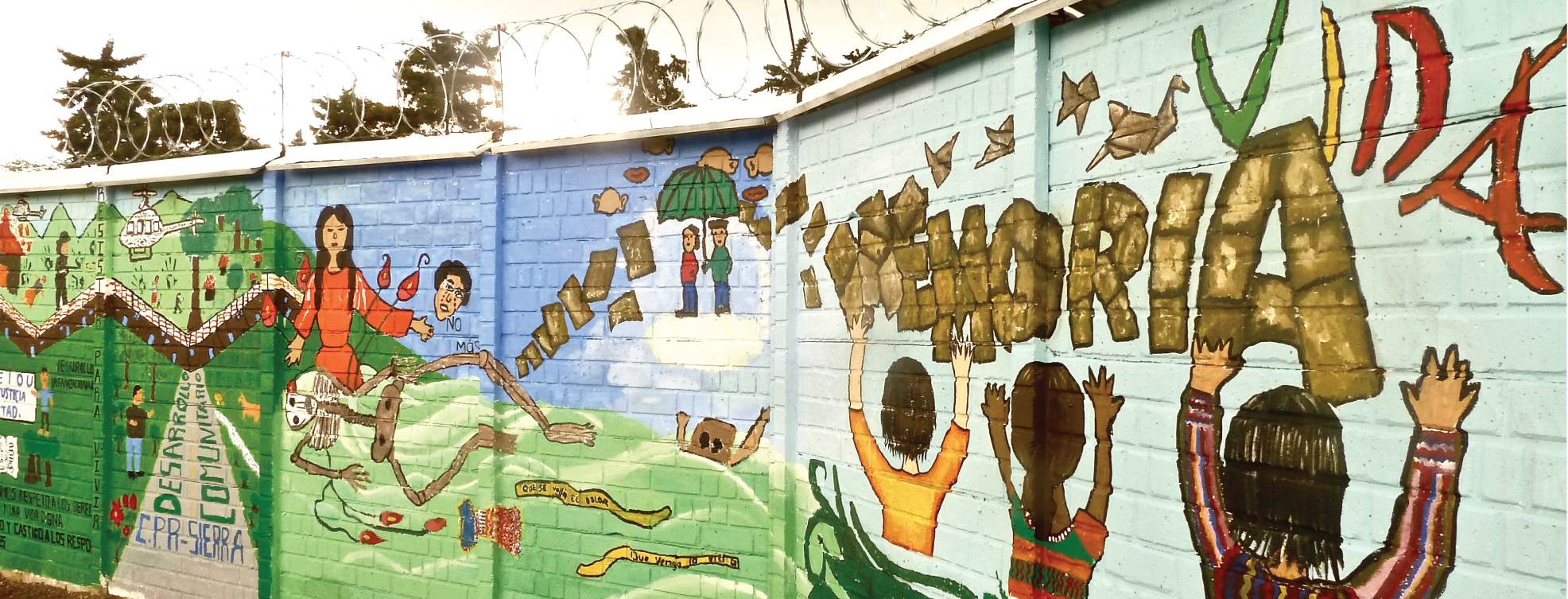
We have accomplished so much in the last 10 years at the Historical Archive of the National Police. And yet, despite the efforts, dedication, and commitment of each person who since 2006 has worked in the AHPN, we still can not say “mission accomplished.”
In 10 years the environment at the Archive has changed so much and become so full of life. Where the building once sheltered unknown stories, over time some of those stories have been revealed. But Guatemala has a long way to go in letting the world get to know more deeply about the secrets within the documents ...
Celebrating Ten Years of Data from the AHPN
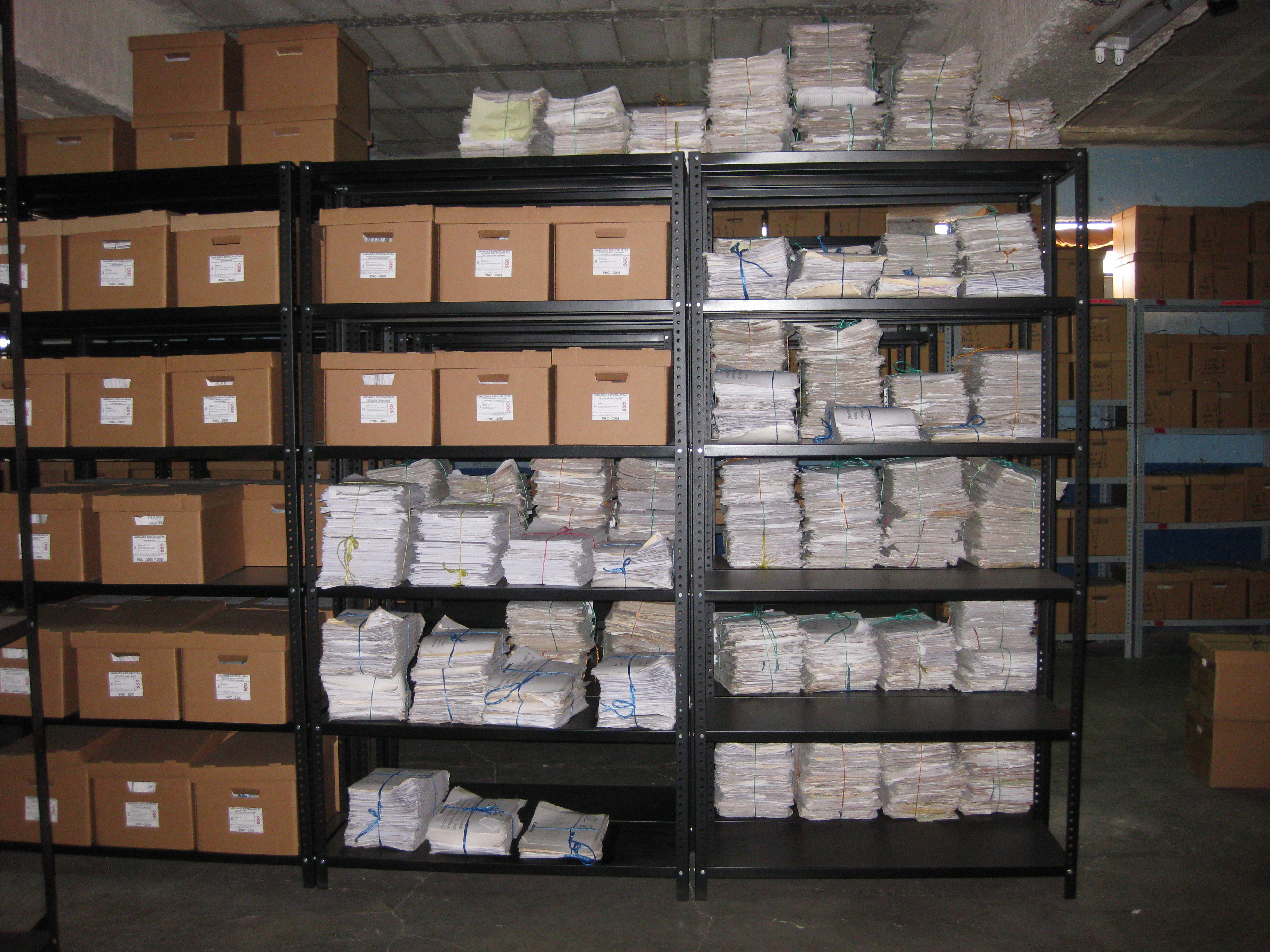
Ten years ago, in July 2005, human rights officers stumbled upon a nondescript warehouse in a commercial zone of Guatemala City and changed history. They had discovered an archive–its existence kept secret–belonging to the Guatemalan National Police, whose officers committed human rights atrocities on behalf of the government during the civil war.
Inside the building was the bureaucratic detritus typical of a large government agency: 80 million pages detailing shifts worked, tasks assigned, assignments fulfilled, workers’ whereabouts, and who was supervising ...
Update of Iraq and Syria Data in New Paper
This week The Statistical Journal of the IAOS published a new(ish) paper by Megan Price and Patrick Ball. The open-access paper, Selection bias and the statistical patterns of mortality in conflict, is a revisiting and updating of both the Iraq and Syria examples used in an earlier paper, Big Data, Selection Bias, and the Statistical Patterns of Mortality in Conflict, which was published last year inThe SAIS Review of International Affairs (JHU Press, 2014).
HRDAG believes that the concerns highlighted by these examples are important for a wide variety of audiences, ...
The Great Lessons in Research at the Archive
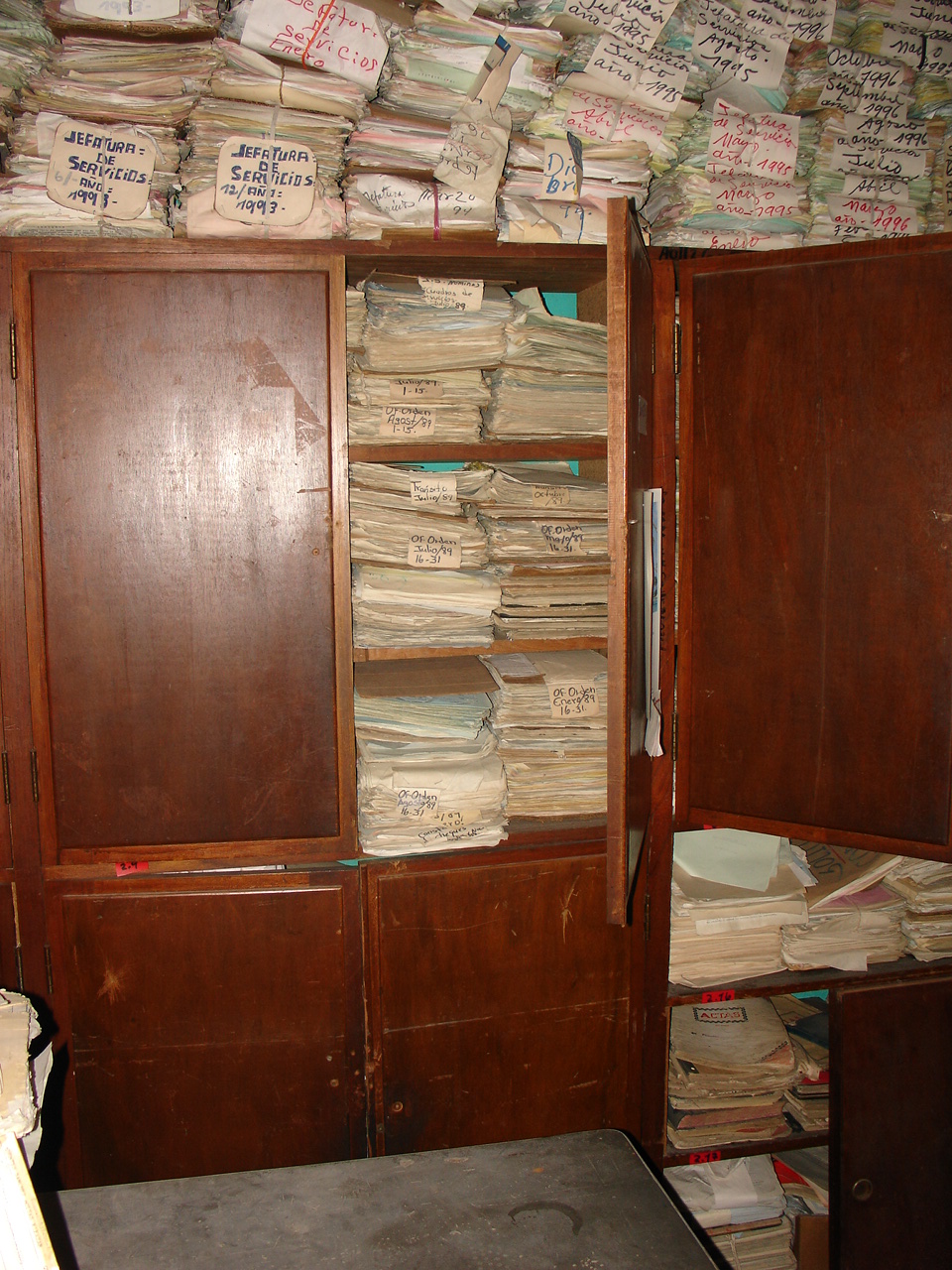
Doing an investigation on the contents of the Archive brought with it three major lessons. The first big lesson was the constant movement (nothing was static), The second great lesson was that everything evolved (the changes were a constant). The third major lesson was to discover how two institutions can work together while geographically far apart.
The constant movement
As there were other processes being carried out at the Archive, everything was in constant movement. In other words, one day the documents were in X location and tomorrow they may be in location Y ...
Evaluation of the Kosovo Memory Book
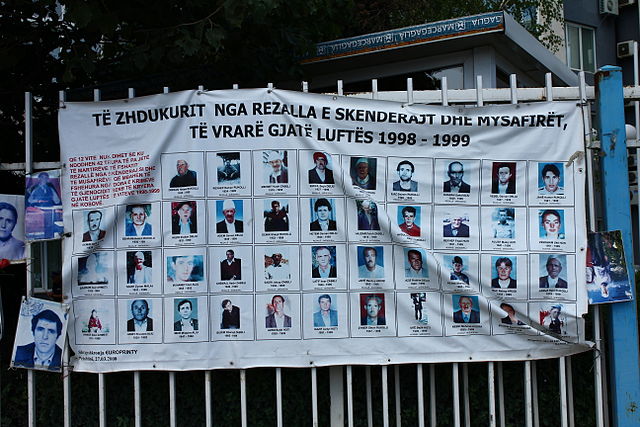
At the end of 2014 we completed the evaluation of the Kosovo Memory Book database and are pleased to conclude that the database has succeeded in documenting all or nearly all the human losses during conflicts in Kosovo during the period from 1998 to 2000.
With a motto of "Let people remember people," the goal of the Kosovo Memory Book (KMB) is to document all people who were killed or disappeared in connection with the war in Kosovo. The project aimed to document all human losses during armed conflict in the territory of the Former Yugoslav Republic (FYR) between 1998 ...