News
Where Stats and Rights Thrive Together
Everyone I had the pleasure of interacting with enriched my summer in some way.
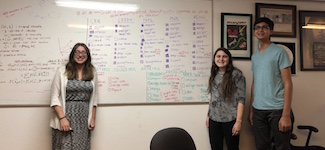
Happy Hacking
From my first introduction to the HRDAG community at the annual retreat it was clear to me that mentorship is an organizational priority and that the contributions of interns are valued. Much of my first couple weeks as a summer intern at HRDAG were spent familiarizing myself with Patrick’s paradigm for principled data processing. At the same time, I was learning the skills and tricks (bash, make, vim, git) that promote an effortless programming workflow, a pursuit that Patrick calls “sharpening the saw” (just like in programming, you can cut down a tree with a ...

HRDAG Retreat 2018
What follows is an elaborate criss-crossing of collaborations—retreat is a time to embrace the productivity that comes with being in the same room.

Kristian Lum in Bloomberg
The interview poses questions about Lum's focus on artificial intelligence and its impact on predictive policing and sentencing programs.

Skoll World Forum 2018
Illuminating Data's Dark Side: Big data create conveniences, but we must consider who designs these tools, who benefits from them, and who is left out of the equation.

Data Science Symposium at Vanderbilt
Patrick Ball keynoted the Data Science Symposium at Vanderbilt University.

New publication in BIOMETRIKA
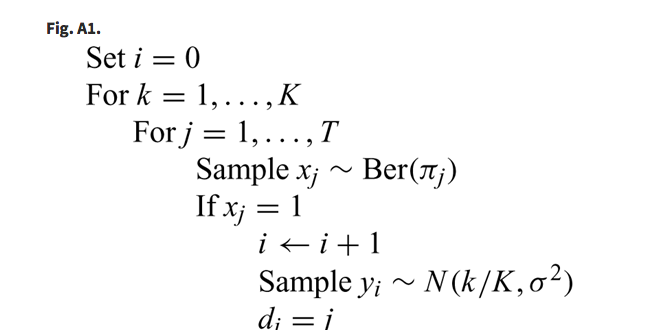
New paper in Biometrika, co-authored by HRDAG's Kristian Lum and James Johndrow: Theoretical limits of microclustering in record linkage.
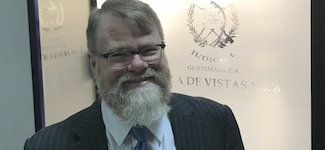
HRDAG Testimony in Guatemala Retrials
HRDAG analysis presented by Patrick found that 5 percent of the indigenous Maya Ixil population was killed in a 15-month period.
FAT* Conference 2018
Kristian Lum spoke about "Understanding the Context and Consequences of Pre-Trial Detention" at the Conference on Fairness, Accountability, and Transparency (FAT*).
Reflections: A Love Letter to HRDAG
On the anniversary of the Universal Declaration of Human Rights, HRDAG executive director Megan Price tells us why she loves her work, and why she feels hopeful about the future.
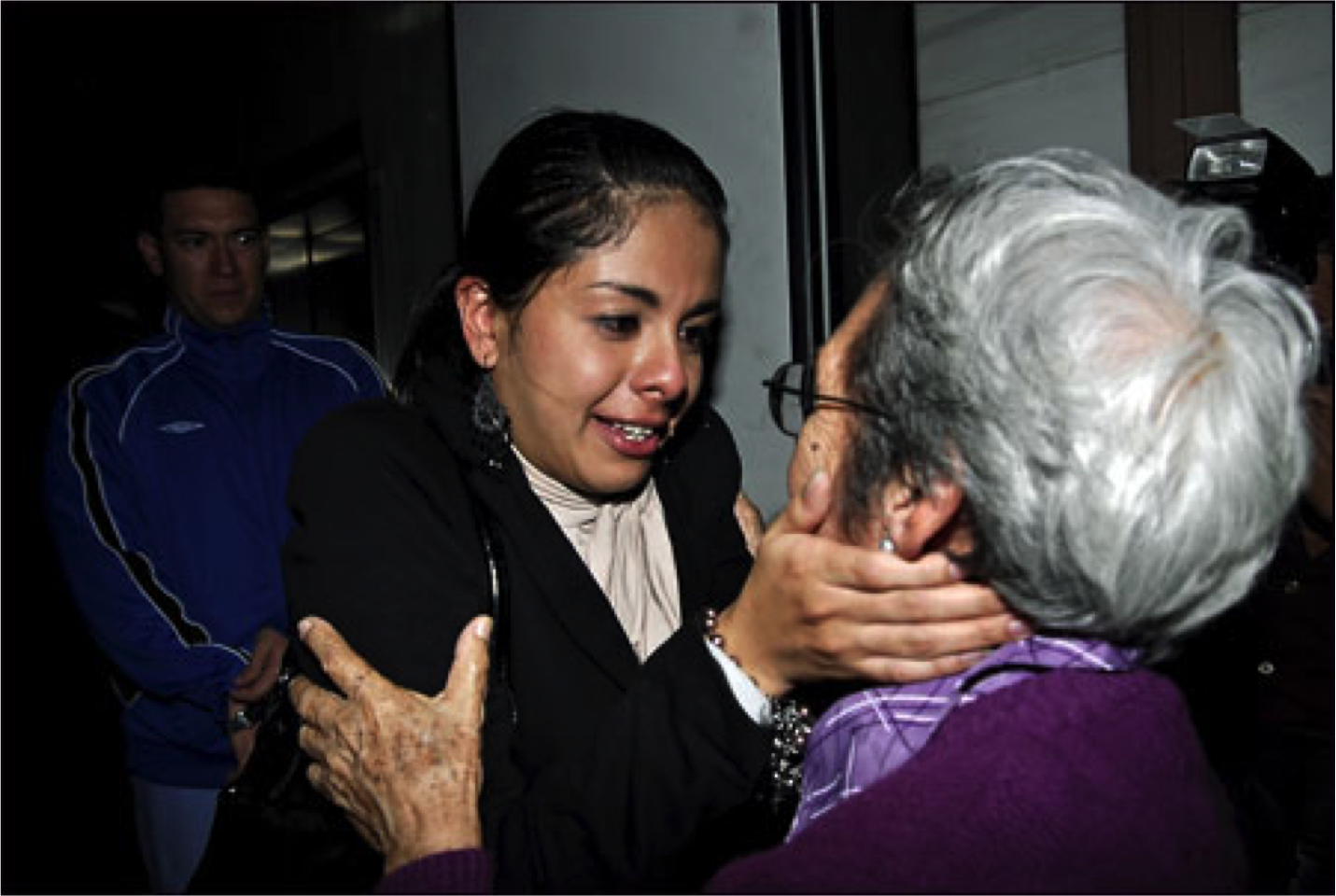
Reflections: The People Who Make the Data
HRDAG associate Miguel Cruz has an epiphany. All those data he’s drowning in? Each datapoint is a personal tragedy, a story both dark and urgent, and he’s privileged to have access.
Reflections: Minding the Gap
How might we learn what we don’t know? HRDAG associate Christine Grillo hits the wayback machine and recalls her first exposure to People Against Bad Things, ideas about bias and correlation versus causation, and truth.

HRDAG and #GivingTuesday 2017
Help us hold human rights violators accountable!
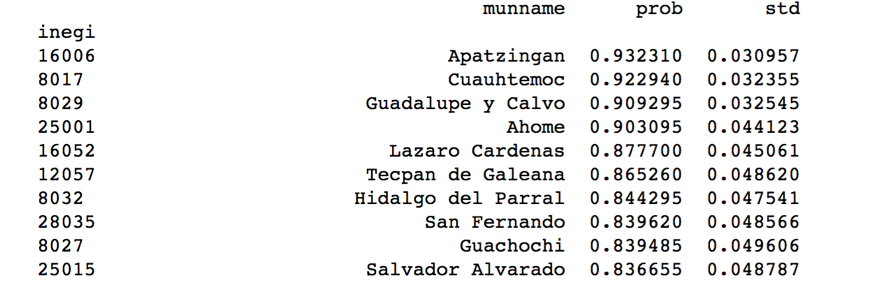
New results for the identification of municipalities with clandestine graves in Mexico
The goal of this project is identify Mexican municipalities with a high probability of having clandestine graves. Knowing where to search will help to create better public programs regarding missing persons in Mexico.
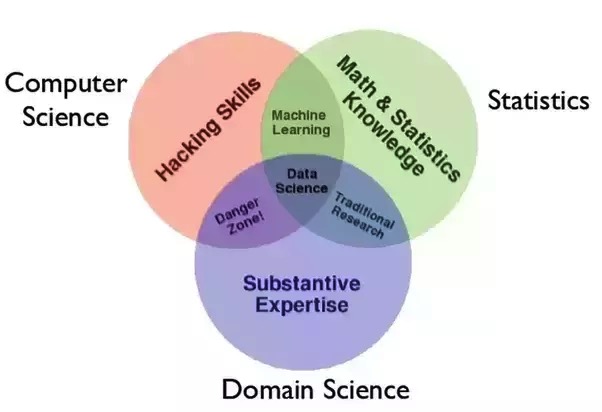
Reflections: The G in HRDAG is the Real Fuel
It took me a while to realize I had become part of the HRDAG incubator—at least that’s what it felt like to me—for young data analysts who wanted to use statistical knowledge to make a real impact on human rights debates.
Reflections: Challenging Tasks and Meticulous Defenders
I have made it my personal objective to amplify HRDAG's message of being extra careful and scientifically rigorous with human rights data.
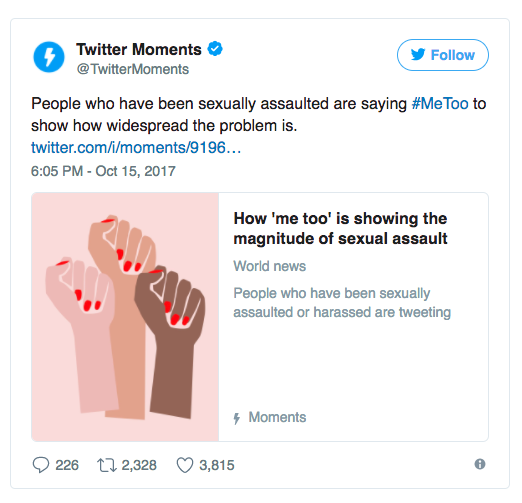
Our Thoughts on #metoo
Violence against women in all its forms is a human rights violation. Most of our HRDAG colleagues are women, and for us, unfortunately, recent campaigns such as #metoo are unsurprising.
In Pursuit of Excellent Data Processing
With help from HRDAG, Roman Rivera built the data backbone for the Invisible Institute's Citizens Police Data Project.

Reflections: A Meaningful Partnership between HRDAG and Benetech
I joined the Benetech Human Rights Program at essentially the same time that HRDAG did, coming to Benetech from years of analyzing data for large companies in the transportation, hospitality and retail industries. But the data that HRDAG dealt with was not like the data I was familiar with, and I was fascinated to learn about how they used the data to determine "who did what to whom." Although some of the methodologies were similar to what I had experience with in the for-profit sector, the goals and beneficiaries of the analyses were very different.
At Benetech, I ...
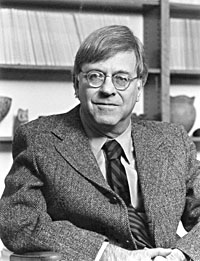
Reflections: Richard Savage’s Vision Fulfilled
In 1984, as a fresh PhD, I heard Richard Savage give his presidential address at the Joint Statistical Meetings in Philadelphia. He called it "Hard/Soft Problems" and made a big pitch for statisticians to get involved in human rights data analysis. It was inspirational, and I was immediately sold. I started working with the American Statistical Association's Committee on Scientific Freedom and Human Rights (now chaired by HRDAG's own Megan Price). Over time, a growing set of statisticians became involved, initially in letter-writing campaigns to help dissident statis...