Blogs
Reflections: Growing and Learning in Guatemala
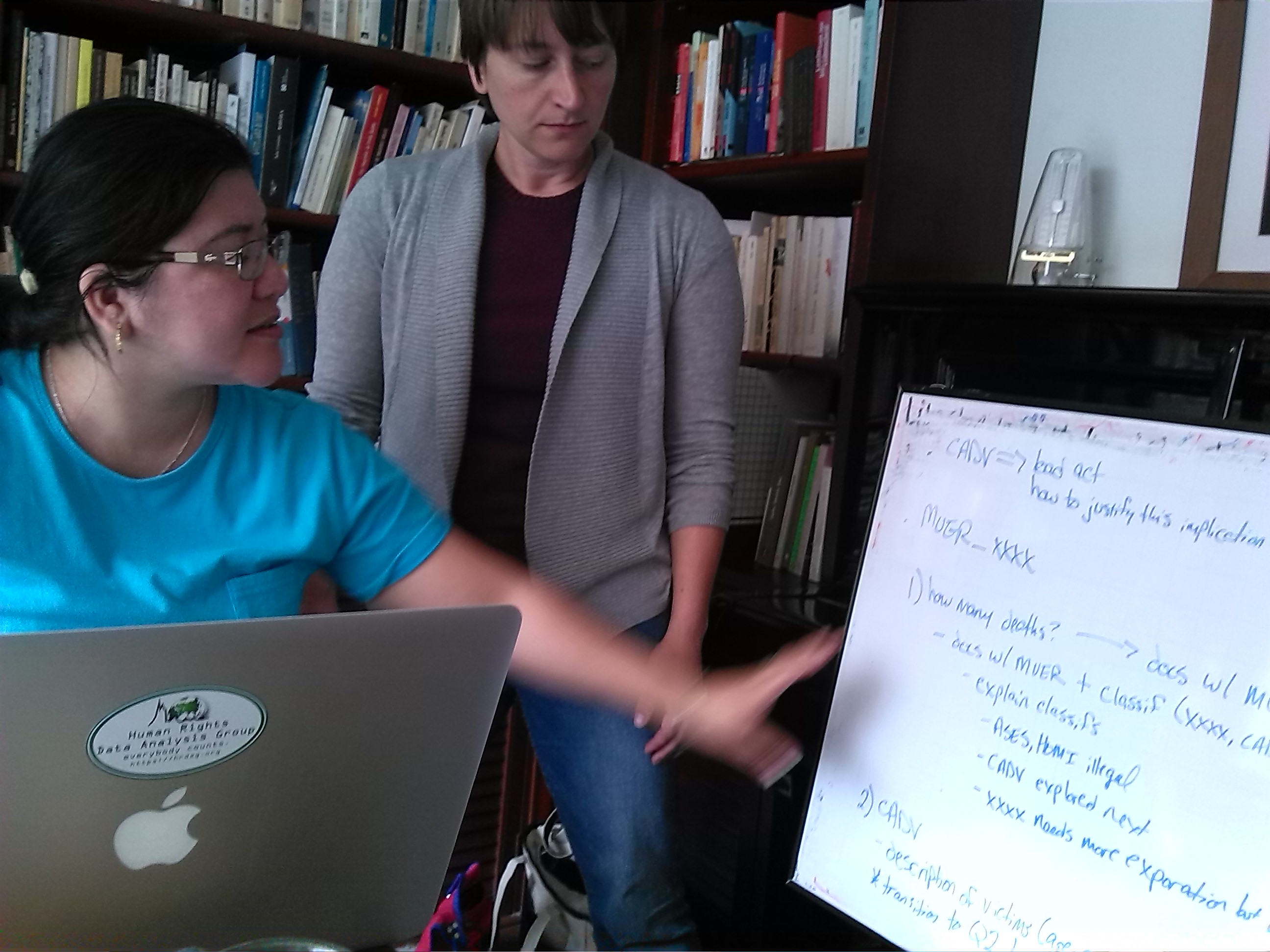
As a woman, mother and sociologist who is curious about the patterns of our political past in Guatemala, I feel privileged to know and work with the HRDAG team. Collaborating and learning from people like Patrick, Megan, Suzanne, Beatriz and Tamy has been an invaluable gift. I have discovered many things, both human and academic. For example, I’ve learned new ways of seeing what seemed everyday and simple, to discover that not only do the social sciences and statistics work hand in hand, but that they are critical for understanding Guatemala’s reality.
Twenty years ...
Letter from the Executive Director
Dear Friends,
This has been quite a year, and I don’t just mean the recent political events in the United States, Europe and the Middle East.
Thanks to your ongoing support, HRDAG has a number of accomplishments to be proud of this year:
Patrick’s testimony in the trial of Hissene Habré for crimes against humanity was cited by the judges three times in their determination of guilt.
We launched a book describing ten years of collaborative work with the Historic Archive of the National Police in Guatemala.
We contributed quantitative analyses to ...

Stephen Fienberg 1942-2016
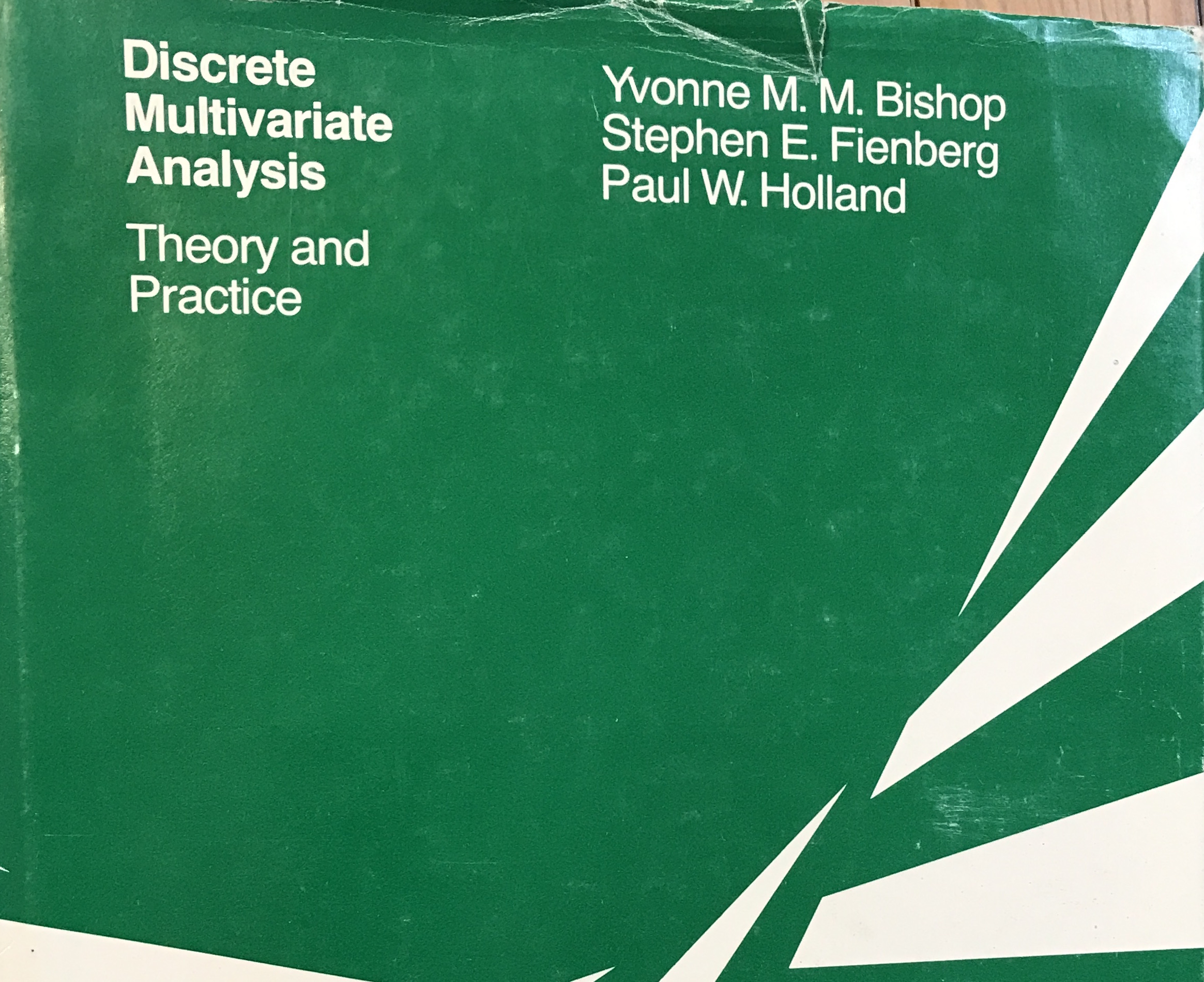
We are saddened by the passing of Steve Fienberg yesterday in Pittsburgh, at the age of 74. He is perhaps best known around the world for bringing statistics to science and public policy and was a beloved professor at Carnegie Mellon University. At HRDAG we are in awe of and grateful for the work Steve did formalizing multiple systems estimation. His work on that front blazed a trail and essentially enabled all of our most important analytical work at the intersection of human rights and statistical science.
If we are to reduce the amount of human violence in the world, ...
HRDAG – 25 Years and Counting
Today is a very special day for all of us at HRDAG. This is, of course, the 68th anniversary of the Universal Declaration of Human Rights—but this day also marks our 25th year of using statistical science to support the advancement of human rights.
It started 25 years ago, in December 1991, in San Salvador, when Patrick Ball was invited to work with the Salvadoran Lutheran Church to design a database to keep track of human rights abuses committed by the military in El Salvador. That work soon migrated to the NGO Human Rights Commission (CDHES). Fueled by thin beer and ...

FAQs on Predictive Policing and Bias
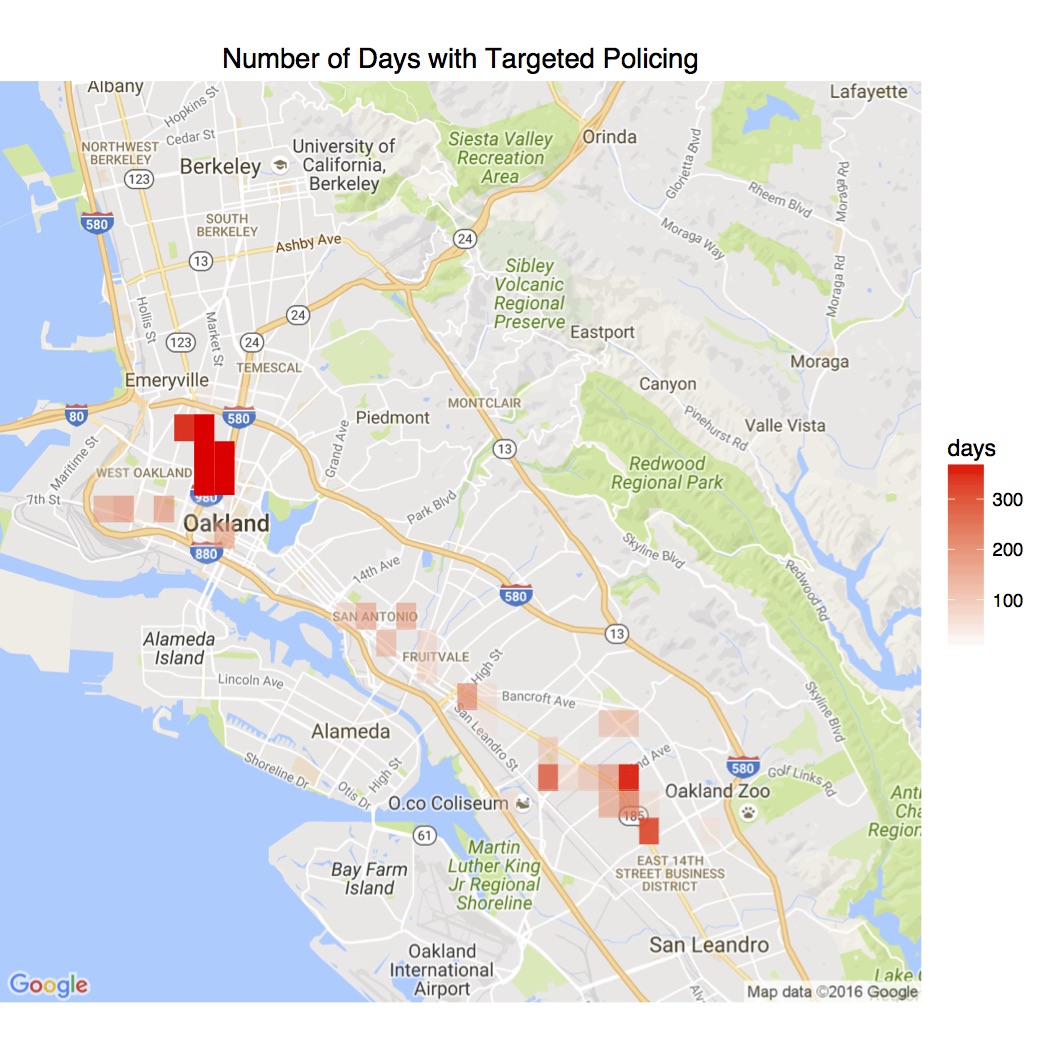
Last month Significance magazine published an article on the topic of predictive policing and police bias, which I co-authored with William Isaac. Since then, we've published a blogpost about it and fielded a few recurring questions. Here they are, along with our responses.
Do your findings still apply given that PredPol uses crime reports rather than arrests as training data?
Because this article was meant for an audience that is not necessarily well-versed in criminal justice data and we were under a strict word limit, we simplified language in describing the data. ...
The case of Ana Lucrecia Orellana Stormont
When working with documents in an archive, every document offers the opportunity for statistical study and quantitative research. But a document can also offer the discovery of a story. That is the case with the disappearance of Ana Lucrecia Orellana Stormont, who was reported missing on June 6, 1983, at the age of 35.
Ana Lucrecia, a professor of psychology at the University of San Carlos, was scheduled to attend a meeting with Edgar Raúl Rivas Rodríguez at the Plaza Hotel in Guatemala’s capital city. Edgar, who also went missing, was a teacher at the School of ...

HRDAG Retreat 2016
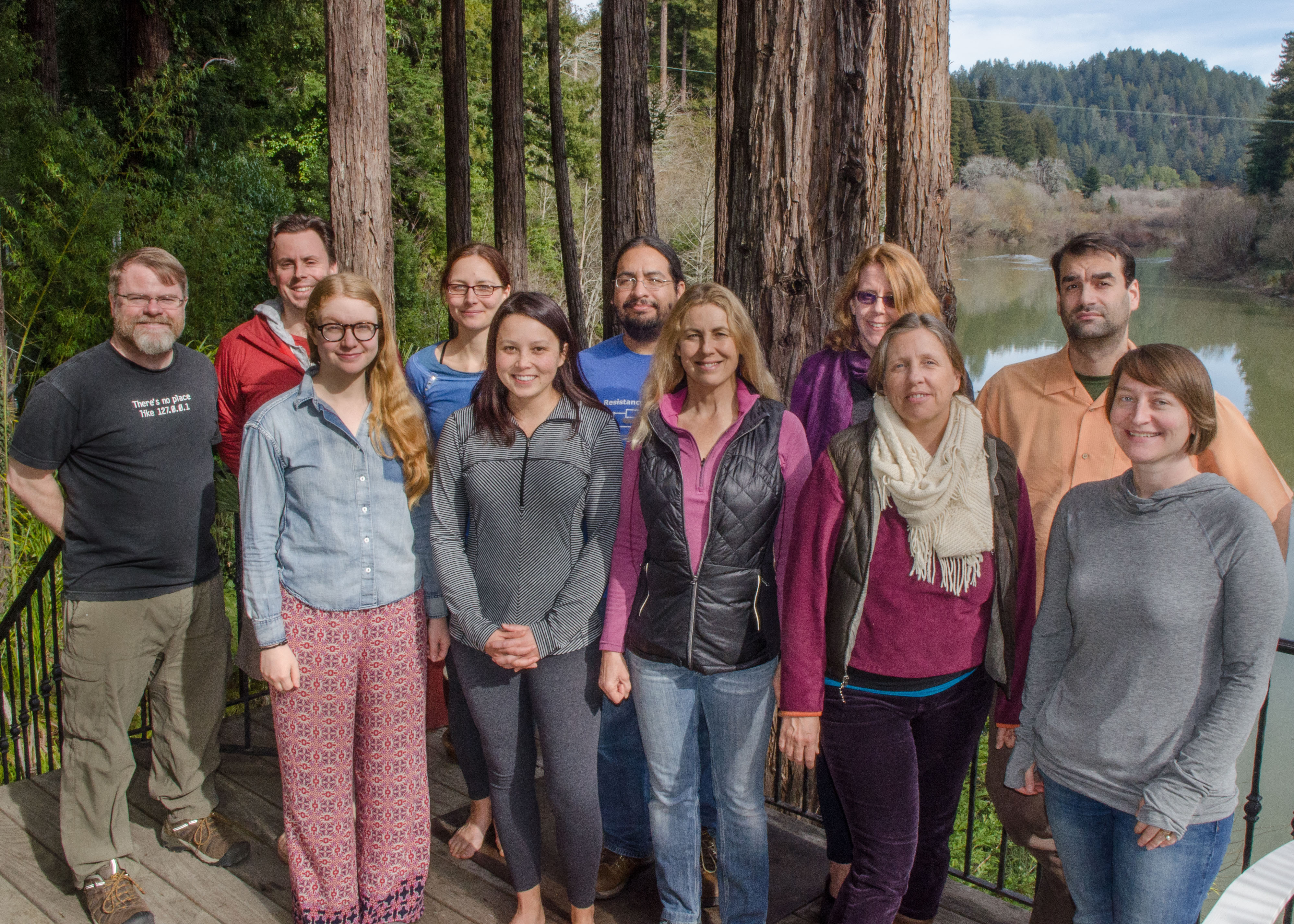
What do you get when you bring seven statisticians, one quantitative political scientist, a writer, a computer scientist, and an administrator together for four days in a vacation rental on California’s Russian River? A lot of code, a technical paper and book chapter revised, another paper started, a great hike in the Redwoods, descriptions of food poisoning and crash landings in war zones, and a lot of talk about feelings.
Did I mention feelings? On the first evening of the annual retreat of the Human Rights Data Analysis Group, executive director Megan Price asked ...
Welcoming a New Board Member
As we get ready to begin our fourth year as an independent nonprofit, we are, as always, indebted to our Advisory Board and to our funders for their support and vision. We’re finishing up a busy year that took us to Dakar (for the trial of former Chadian dictator Hissène Habré), Pristina (for the release of the Kosovo Memory Book), Colombia (for work on a book about the Guatemalan Police Archives), and kept us busy here at home working on police violence statistics. But one of our biggest victories has been to score a new, talented, wise Advisory Board member—Michael ...
An Award for Anita Gohdes
On November 26, HRDAG colleague Anita Gohdes was awarded the German Dissertation Prize for the Social Sciences. The patron of the prize is the President of the German Parliament, Norbert Lammert, who presented Anita with the award.
Anita’s dissertation, “Repression 2.0: The Internet in the War Arsenal of Modern Dictators,” investigates the role played by social media networks in modern dictatorships, such as President Assad’s regime in Syria. On one hand, Anita argues, social media can help opposition groups to organize more effectively, but on the other ...

Changes at HRDAG
A special announcement from the HRDAG Advisory Board:
Beginning officially on December 1, HRDAG is changing leadership. After nearly three years as Executive Director, Patrick Ball will become the new Director of Research. Megan Price will be the new Executive Director.
Patrick has spent more than 25 years working at the intersection of human rights and statistical science. Over that time, he has finely honed statistical methodology for quantifying mass killings. Now he is excited about the chance to go deeper into research for HRDAG and develop additional approach...

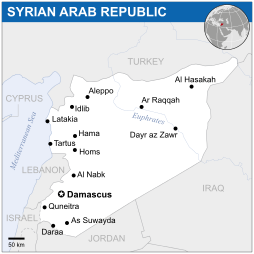
Rapid response to: Civilian deaths from weapons used in the Syrian conflict
On November 4, 2015, the BMJ published our "Rapid Response" to Civilian deaths from weapons used in the Syrian conflict (BMJ 2015;351:h4736). The response was co-authored by Megan Price, Anita Gohdes, Jay Aronson (Carnegie Mellon University, Center for Human Rights Science), and Christopher McNaboe (Carter Center, Syria Conflict Mapping Project).
We have three concerns about this article. First, the article apportions responsibility for casualties to particular perpetrator organizations based on a single snapshot of territorial control that ignores the numerous (and ...