HRDAG science
All is Not Lost with Incomplete Datasets
Structural Zero 10: What is a "structural zero"
I’m Maria Gargiulo. I started with HRDAG as an intern in 2018 and I’ve worked with the team as a statistician since 2020. I’m currently earning my doctoral degree from the London School of Hygiene and Tropical Medicine where my thesis explores the very statistical methods HRDAG uses to study and understand complex human rights violations around the world.
Recently, we wrote about the challenge of statistical bias: the data that is collected is seldom complete and may not be representative of the population we are ...

Estimating the Number of SARS-CoV-2 Infections and the Impact of Mitigation Policies
This Harvard Data Science Review article uses the least unreliable source of pandemic data: reported deaths.
How much faith can we place in coronavirus antibody tests?
Given a positive test result, what is the probability that an individual has antibodies? This HRDAG-authored Granta article explains the science.

How Many People Will Get Covid-19?
HRDAG has authored two articles in Significance that add depth to discussions around infection rates.

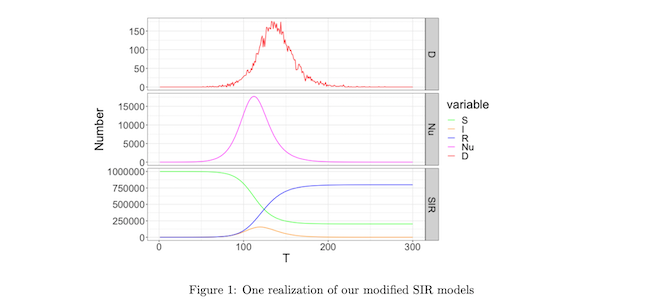
A Model to Estimate SARS-CoV-2-Positive Americans
We’ve built a model for estimating the true number of positives, using what we have determined to be the most reliable datasets—deaths.
Epidemiology has theories. We should study them.
With so many dashboards and shiny visualizations, how can an interested non-technical reader find good science among the noise?

Uncertainty in COVID Fatality Rates
In this Granta article, HRDAG explains that neither the infectiousness nor the deadliness of the disease is set in stone.
Overbooking’s Impact on Pre-Trial Risk Assessment Tools
How do police officer booking decisions affect tools relied upon by judges?

Identifiers of Detained Children Have Implications for Data Security and Estimation
Identifiers being sequential could make possible estimations of the population of detained children.

HRDAG at FAT* 2020: Pre-Trial Risk Assessment Tools
How do police officer booking decisions affect pre-trial risk assessment tools relied upon by judges?

Learning a Modular, Auditable and Reproducible Workflow
The modular nature of the workflow and use of Git allowed us to work on different parts of the project from across the country.
.Rproj Considered Harmful
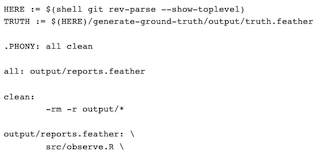
We aim to produce code that is clear, replicatable across machines and operating systems, and that leaves an easy-to-follow audit trail.
New Research on Civilian Deaths and Disappearances in El Salvador
This rigorous estimate shows that 1-2 percent of the country’s population was killed or disappeared during the civil war.

Report on Measures of Fairness in NYC Risk Assessment Tool
The report tries to answer the question of whether a particular risk assessment model reinforces racial inequalities in the criminal justice system.
RustConf 2019, and systems programming as a data scientist
It could make sense to use Rust as a data journalist for in-browser computations, and other thoughts from RustConf.

La estadística de mortalidad del conflicto en Perú
En ese artículo respondemos a una crítica del estudio de mortalidad que realizamos para la Comisión de la Verdad y Reconciliación en 2003.
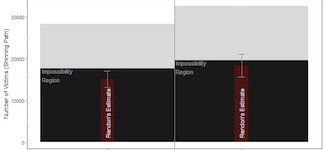
The Statistics of Mortality Due to Conflict in Peru
A key point is that human rights data collection prior to the TRC largely ignored violence by the Shining Path.
New analysis of World War II Korean “comfort women” held by Japanese
There may have been more undocumented World War II-era Korean "comfort women" than known.

HRDAG Report on Disappeared Tamils in Army Custody in Sri Lanka
HRDAG has published a report about the 500 Tamils who disappeared while in Army custody in Sri Lanka in 2009.
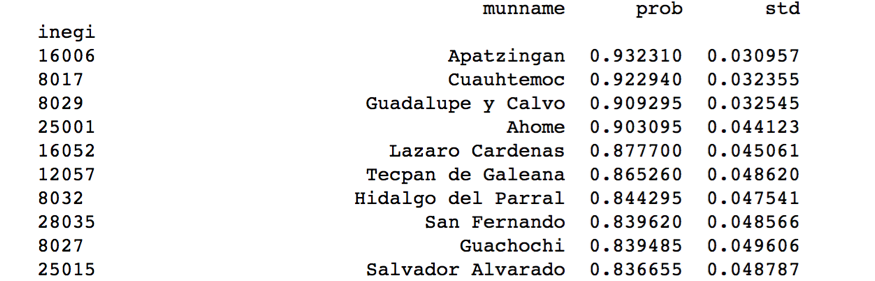
New results for the identification of municipalities with clandestine graves in Mexico
The goal of this project is identify Mexican municipalities with a high probability of having clandestine graves. Knowing where to search will help to create better public programs regarding missing persons in Mexico.