HRDAG practices
privacy, creative commons, sharing data, working with students, etc.
Learning a Modular, Auditable and Reproducible Workflow
The modular nature of the workflow and use of Git allowed us to work on different parts of the project from across the country.
Where Stats and Rights Thrive Together
Everyone I had the pleasure of interacting with enriched my summer in some way.
In Pursuit of Excellent Data Processing
With help from HRDAG, Roman Rivera built the data backbone for the Invisible Institute's Citizens Police Data Project.

FAQs on Predictive Policing and Bias
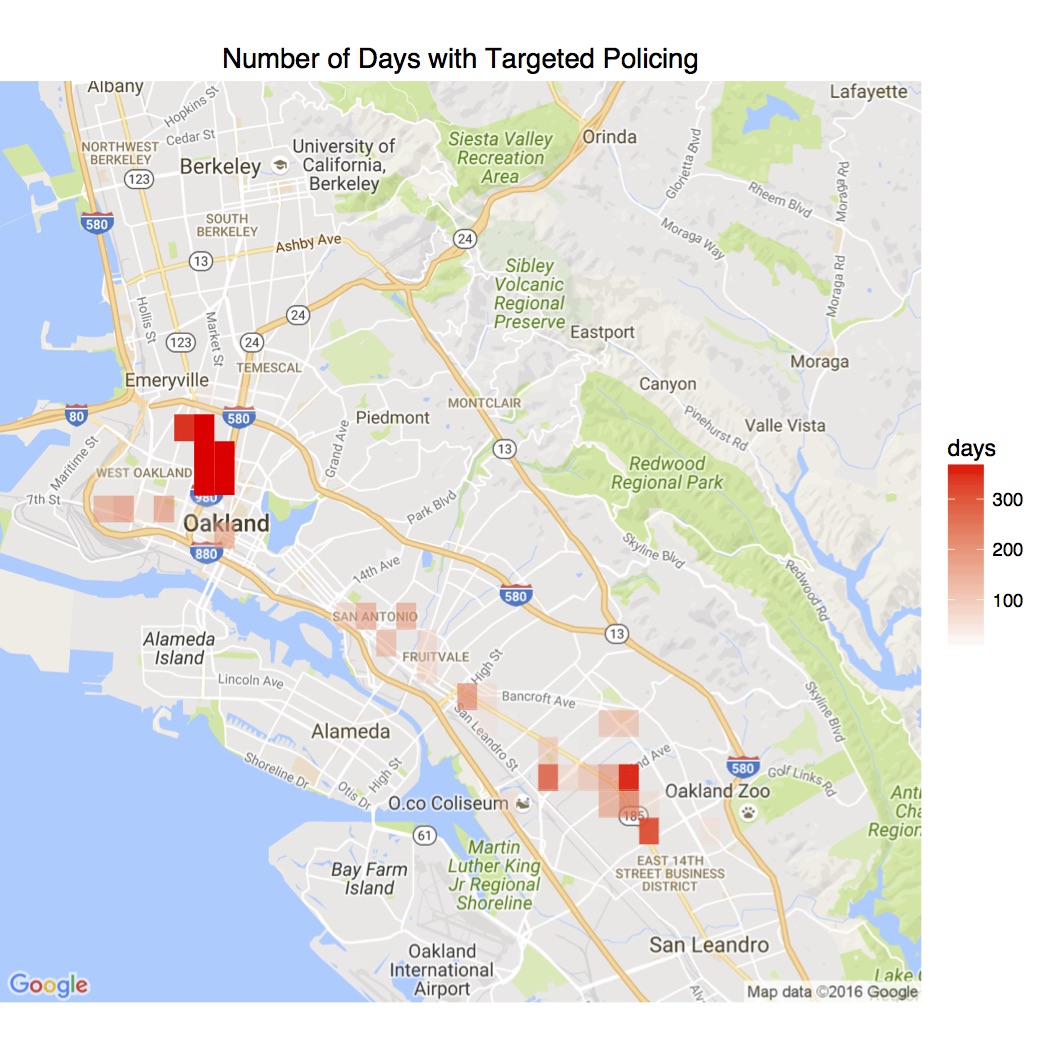
Last month Significance magazine published an article on the topic of predictive policing and police bias, which I co-authored with William Isaac. Since then, we've published a blogpost about it and fielded a few recurring questions. Here they are, along with our responses.
Do your findings still apply given that PredPol uses crime reports rather than arrests as training data?
Because this article was meant for an audience that is not necessarily well-versed in criminal justice data and we were under a strict word limit, we simplified language in describing the data. ...
Focus on Good Science, not Scientists
We recently learned about an article by Dr Nafeez Ahmed that criticizes the methods and conclusions of the Iraq Body Count (IBC) and the work of Professor Michael Spagat. Dr Ahmed cites our work extensively in support of his arguments, so we think it’s useful for us to reply.
We welcome Dr Ahmed’s summary of various points of scientific debate about mortality due to violence, specifically in Iraq and Colombia. We think these are very important questions for the analysis of data about violent conflict, and indeed, about data analysis more generally. We appreciate his ...
HRDAG Offers New R Package – dga
Much of the work we do at HRDAG involves estimating the number of undocumented deaths using a statistical technique called multiple systems estimation (MSE, described in more detail here). One of our goals is to make this class of methods more broadly available to human rights researchers. In particular, we are finding that Bayesian approaches are extremely valuable for MSE. Accordingly, we are pleased to offer a new R package called dga (“decomposable graphs approach”) that performs Bayesian model averaging for MSE.
The main function in this package implements a ...

The Great Lessons in Research at the Archive
Doing an investigation on the contents of the Archive brought with it three major lessons. The first big lesson was the constant movement (nothing was static), The second great lesson was that everything evolved (the changes were a constant). The third major lesson was to discover how two institutions can work together while geographically far apart.
The constant movement
As there were other processes being carried out at the Archive, everything was in constant movement. In other words, one day the documents were in X location and tomorrow they may be in location Y ...
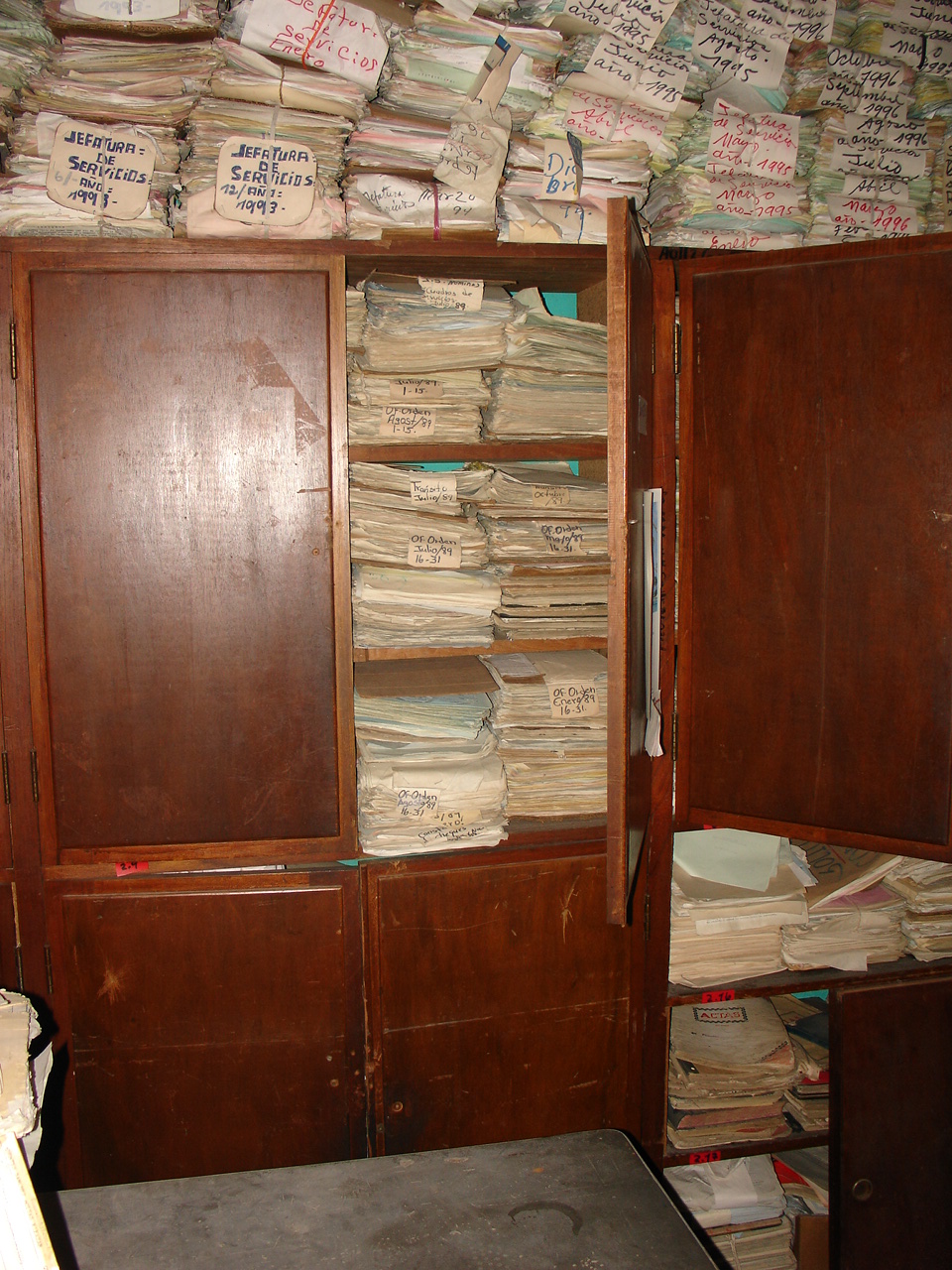
The AHPN: Home of Stories Old and New
Access to the records contained in archives is a concern shared by many. Archives support memory and free access to them strengthens democratic processes. Everyone should be allowed to see first-hand the records contained in an archive and be free to interpret them as needed.
Access to archives can increase knowledge on various topics and opens opportunities for different fields of knowledge. (more…)
HRDAG Drops Dropbox
On Wednesday, April 9, the file hosting service Dropbox announced the addition of Condoleezza Rice, former U.S. National Security Advisor and Secretary of State, to their Board of Directors, citing the need for “a leader who could help us expand our global footprint.”
In response to this announcement, HRDAG requested (and rapidly received) a refund for our recent purchase of Dropbox for Business, and will drop the use of their service entirely.
Patrick Ball, HRDAG’s Executive Director stated: “As a human rights organization, we find Condoleezza Rice's complic...
The Day We Fight Back
Today, February 11, is the day of national protests against the National Security Administration.
The critical threat is mass surveillance. In the words of The Day We Fight Back, “Together we will push back against powers that seek to observe, collect, and analyze our every digital action. Together, we will make it clear that such behavior is not compatible with democratic governance. Together, if we persist, we will win this fight.” (more…)
Seeking the Truth with Documentation
The need to establish the truth around events is central to goals of transitional justice, particularly securing accountability, establishing legitimate and effective justice mechanisms, and laying the foundations for a peaceful society.
Documentation to provide verifiable and widely accepted accounts of such events is a critical component of establishing this truth, or the multiple truths that may exist for a population. It is difficult to overstate the important role of documentation in transitional justice efforts. If some of what follows sounds familiar, echoing ...
A Universal Declaration of a Few Data Rights
Today we celebrate the 65th anniversary of the Universal Declaration of Human Rights, which was adopted by the UN General Assembly on 10 December 1948. At HRDAG, we are non-partisan: we do not favor any party or government in conflicts. But we are not neutral: we are always in favor of human rights. We believe in the power and value of data; as we see it, data distills human actions and existence, all of which have power and value. With this in mind, we propose these seven articles that comprise our declaration of a few data rights (click through the links for some ...
How We Choose Projects
For more than 20 years, HRDAG has been carving out a niche in the international human rights movement. We know what we’re good at and what we’re not qualified to do. We know what quantitative questions we think are important for the community, and we know what we like to do. These preferences guide us as we consider whether to take on a project. We’re scientists, so our priorities will come as no surprise. We like to stick to science (not ideology), avoid advocacy, answer quantifiable questions, and increase our scientific understanding.
While we have no ...
The story of one document inside the AHPN
The beginnings are crucial in every step—as critical as the beginning of sound, life, hope, and justice. Here are some first steps from the AHPN (Archivo Histórico de la Policía Nacional).
This is the story of Oficio Number COC/207-laov, a document that at first appears uninteresting. But this is not just any oficio*. This is one of the many documents that helped bring to trial the people responsible for the disappearance of Edgar Fernando García. A father, husband, son, and student, García was, like many people today, interested in changing his community for ...
HRDAG and the Digital Commons
One of the three main goals of HRDAG is education and outreach, and to that end we use Creative Commons licenses for all of our blogposts and, whenever possible, for our publications. Using a Creative Commons license makes it clear that educators are free to use HRDAG's publications, in their entirety, and with the peace of mind that they are doing so with our blessing.
Also, the use of the Creative Commons license allows us to participate in and encourage the creation of a digital commons, which we feel helps to advance another one of our goals, the creation of ...