With More Sanctions Should the ICC Trust Big Tech?
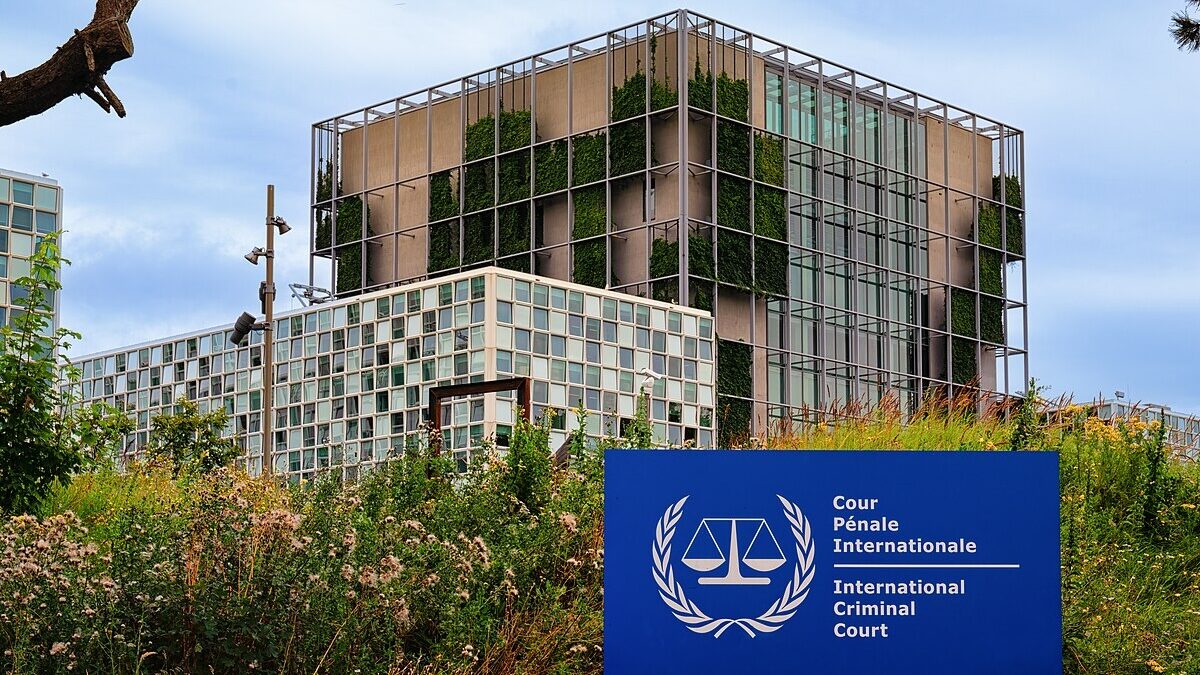
The International Criminal Court at The Hague, Netherlands
On Friday, the Trump Administration once again attacked the International Criminal Court (ICC). The announcement essentially prohibits US companies from doing business with the Court. It is one more attack (there have been at least five since January 2025) in a campaign explicitly intended to weaken the Court and prevent it from taking action against Trump Administration officials who may be referred to the Court in the future. The administration previously sanctioned 17 prosecutors and judges, but this new move marks the first time the Administration has gone after the entire Court as an institution.
In a joint statement, Canada, Denmark, Germany, France, Italy, Japan, the Netherlands, and the United Kingdom said that they “strongly disagree” with the Trump administration’s sanctions. Israel’s Prime Minister Benjamin Netanyahu expressed public support for the sanctions; the Court issued an arrest warrant for Netanyahu for crimes against humanity and war crimes in 2024.
These new sanctions were announced by Secretary of State Marco Rubio; after a six month period, continuing to do business with the Court will incur financial punishment by the US government. Some of the companies affected by these sanctions are Microsoft, which provides cloud infrastructure, digital evidence management platforms, and email services to the Court; as well as Relativity and Accenture, which provide centralized storage, digital evidence management, and IT platforms.
For decades, US government officials have used extrajudicial pressure against the banks to exclude their critics from the world’s financial system. There are many laws that require banks to monitor their customers in order to exclude terrorists, drug cartels, and other criminals; thin-skinned government officials quickly turned those rules against sex workers, cannabis entrepreneurs, and then against whistleblowers who embarrassed military leaders with evidence that those leaders approved or ordered war crimes.
I started worrying about how Big Tech could become a weapon for US policy about two years ago, soon after the Trump Administration took office, when they announced their first sanctions against the ICC. When I heard about that prosecutor Karim Khan’s email account was cut off by Microsoft, I realized that Big Tech companies would quickly comply with any government request – legal or not – to exclude people from the world’s tech infrastructure. Being cut off from Big Tech platforms would paralyze most organizations. No Outlook? No Word? No Excel? No Oracle or Palantir? No cloud storage, cloud human resources, cloud compliance platforms? Your organization simply cannot function.
HRDAG took a stand against tyranny a year ago, and we wrote again about attacks on the Court 10 months ago. In August, we wrote more deeply about the threat facing the human rights community, and the terabytes of precious data that are at risk when we entrust it to companies that cave when they get a call from the Trump Administration. In response, we launched the Technology Freedom Cooperative.
The Tech Freedom Coop is a partnership between HRDAG and four other nonprofits, and together we have built shared technology infrastructure. We do this by distributing storage and computing capacity to preserve, process, and analyze critical human rights files. We have multiple physical locations outside of the United States and Puerto Rico, including Canada, Mexico, and Europe. One of the benefits of this distribution is that those locations are distinct from US legal jurisdictions. As I wrote in August, “This ensures that if one jurisdiction becomes hostile to our work, researchers will still have access to complete backups in safe countries. After an attack, organizations can move, reopen, and continue their work.”
We were motivated to create the Tech Freedom Coop because US tech companies have proven that they do not have the courage to resist unconstitutional pressure by the Administration. Do we really want to leave evidence of war crimes on Microsoft’s servers? Do we want to trust Google with videos of violent ICE detentions? Do we want victim statements to be held by Amazon Web Services or Dropbox? Can we rely on OpenAI or Anthropic for AI capability?
Because HRDAG uses data and scientific reasoning to investigate violence and human rights violations by state actors all over the world, preserving the data is of utmost importance. HRDAG does not take positions on whether US action in Afghanistan, mass deportations, or the recent bombings of civilian boats in the Caribbean constitute criminal acts; deciding whether these actions are legal or moral is the domain of advocates and lawyers.
We are scientists, not advocates. As scientists, we work to support our partners by producing unbiased, scientific results that bring clarity to human rights violence and by ensuring that the “truth” is the most accurate truth possible. Our partners are international and local human rights groups, prosecutors and defense attorneys, courts, and truth commissions. They advance human rights by listening to and amplifying the voices of victims of human rights violations; our partners shape the questions we address and guide our data collection. We use technical and scientific expertise to protect and analyze the data they collect. We use AI models and rigorous quantitative reasoning to understand patterns of violence, to make statistical estimates of events that are not recorded in the data, and we present and defend these arguments to those who would apologize for violence and injustice.
We are non-partisan, but we are not neutral: we are always in favor of human rights. Now that for-profit companies have shown that they cannot be relied upon to defend their customers, we need to ask how their cowardice becomes our vulnerability. The Tech Freedom Coop is deliberately choosing cooperation, autonomy, and free software.
Image: The International Criminal Court (ICC) at The Hague, Netherlands. Date 23 July 2024, 15:51. Source: The International Criminal Court (ICC) at The Hague, Author Tony Webster. Creative Commons Attribution 2.0 Generic. Link.
