The entangled landscape of hardware and software
 I was first introduced to HRDAG when I met Megan at Aspiration’s Nonprofit Software Development conference. At the time I was looking to intern for an organization that combined my interests in social justice and computer science. As a UC Berkeley student, I had engaged with social movements as a community organizer on campus, but I was never able to tie in my academic work. I had been struggling to find a workplace where I could apply the skills I was learning academically to defend the rights of all individuals no matter their background.
Fortunately, HRDAG gave me the opportunity to experience a work environment that matched my values while learning and applying technical skills.
I spent my summer off from UC Berkeley working with HRDAG as a development operations intern. As a field, development operations sits at the center of software development, technology operations, and quality assurance. This internship was the first time I was exposed to a development operations role, and I really enjoyed thinking about the entangled landscape of hardware and software.
My main focus this summer was assisting Patrick Ball and other HRDAG partners on infrastructure related to the Technology Freedom Cooperative (TFC). The TFC is “building shared technology infrastructure: distributed storage and computing capacity to preserve, process, and analyze critical human rights files.” I find the work of the TFC invaluable as it supports nonprofits in moving away from Big Tech, giving them more control and protection over the data they are working with. If you are interested in learning more about the TFC’s mission and work, you can read more here.
Throughout the summer I completed five main tasks for the TFC.
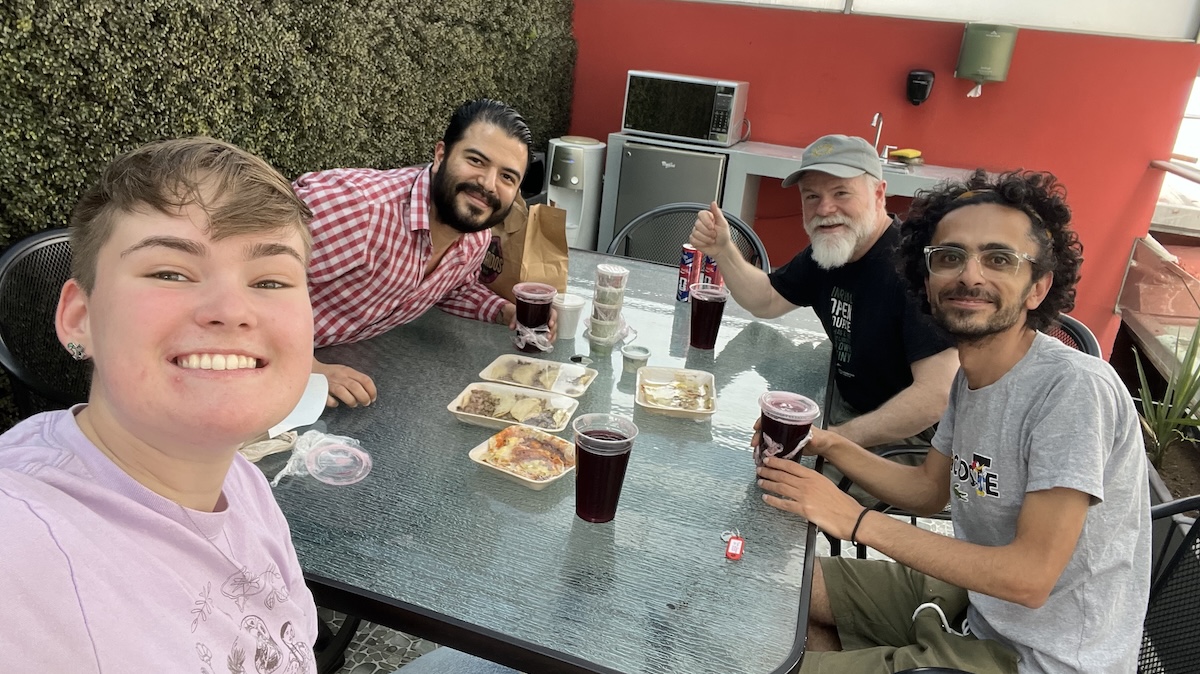
- Helping Patrick and Data Civica partners set up a new server in Mexico City to be used for data storage and entrance into the TFC
- Stress-testing and editing the TFC’s guide to enrolling a user’s Yubikey and machine in the system for three new users for secure authentication
- Writing two instructional guides for TFC members on…
- Using Goose as a harness for connections with TFC’s AI models
- Exploring TFC’s servers as a new user
- Building a server rack and rewiring HRDAG + TFC architecture in the San Francisco office for easier access and organization
- Building a Virtual Machine to house the TFC’s Forgejo instance (a GitHub alternative) for secure authentication, moving the TFC away from reliance on Big Tech and towards self sufficiency
While I won’t get into the technical details of the projects I was working on, all of these projects taught me how to be a better computer scientist and engineer. During each task I had to think critically about how my subsection fit into the broader TFC ecosystem. The exposure to such a wide range of topics gave me a broad view of the work I could potentially start in my future career.
Alongside of these main tasks, Patrick provided ample time for me to research concepts I was encountering for the first time. Patrick and I would sit at HRDAG’s meeting room table discussing public-private key encryption, quantum computing, and SSH authentication. Then I would go off and spend hours researching. This assurance to continue my learning speaks to HRDAG’s willingness to teach while also having interns complete their work. I am extremely grateful I was able to intern in such a welcoming space where my curiosity and learning were not only accepted but encouraged.
As I begin my final year at UC Berkeley, I feel inspired to continue finding ways to tie my technical skills into my passion for social justice. I am very excited that I will continue working with HRDAG on the TFC as a consultant this fall. Upon graduation I hope to work for an organization similar to HRDAG where I can continue to build infrastructure to suit the needs of its users, not of Big Tech.