Naming Police Officers Who Kill in California
New Functionality in the Police Records Access Project Highlights the Names of Individual Police Officers
Oakland resident Erik Salgado was 23 years old when he was stopped by the California Highway Patrol after a report of reckless driving. Police fired more than 40 rounds into his vehicle. He was shot 18 times, and his pregnant girlfriend next to him in the car was also shot. Erik died, while his girlfriend survived—though she lost the baby. Though Erik was unarmed, the police claimed that Erik was ramming them with his vehicle. Neighbors say the scene was chaotic: “They kept yelling for him to turn off the car, but he was dead. And then the poor girl kept screaming,” said one neighbor. There was no video footage.
Since Erik’s death in 2020, family and community members have fought for answers and accountability. One of the big questions: were the officers who killed Erik involved with other police-involved shootings previously?
The answer in this case is yes. In particular, Richard Henderson, an officer who had been with California Highway Patrol for 8 years, has a controversial past. In addition to calling the police on his girlfriend in an incident that resulted in her being shot and killed by Long Beach Police officers in 2017, Henderson was involved in another shooting of another young Latino man in 2016. During a traffic stop, Henderson and his partner shot through the windshield of a truck and killed the driver (19-year old Pedro Erik Villanueva) and injured the passenger, both of whom were unarmed. Henderson claimed the truck was driving toward the officers when they opened fire.
Henderson is one egregious example of a larger problem police accountability advocates have long documented: officers who are involved in shootings, homicides, or other violent or unethical behavior, but who remain in law enforcement without meaningful accountability. In some cases, these officers move between agencies or jurisdictions. Advocates often refer to them as “wandering officers.”
Today, there is a powerful new tool available to identify these patterns.
The Police Records Access Project, a coalition project involving HRDAG and academic, research, journalistic, and nonprofit groups, now has new functionality that lifts up the names of police officers involved in these violent events.
The Police Records Access Project is an ambitious data project pulling in millions of pages of public records, obtained through persistent records requests by our partners. These documents span all the different police forces in California—from university police to sheriff’s offices to California Highway Patrol—and includes evidence of misconduct, shootings, lying, and sexual abuse. Agencies are required to turn over many of these documents upon request under a landmark 2018 law called the Right to Know Act.
Our data team takes piles of poorly formatted PDFs and works to make sense of them: identifying dates, locations, details of what happened, and which officers were involved. The Police Records Access Project has always included search functionality for officer names, but until now, that functionality was limited to basic search.
The new version of the Police Records Access database highlights officer names much more directly. For every case page in the database, the project extracts the names of officers and makes them visible. Users can click on an officer’s name to see other documents in the database involving that officer.
The database also uses sophisticated sensemaking with large language models, plus human verification, to weigh whether officers are directly involved in a case, rather than merely mentioned or adjacent to the main issues at the heart of the record.
Officer names can then be looked up in the National Police Index, which helps researchers find out details about the career histories of police officers.
Obtaining documentation and identifying the people responsible for state violence is essential to long-term accountability—not only in cases of police violence in California, but across many of HRDAG’s efforts to bring accountability to those who violate human rights. As HRDAG Director of Research Patrick Ball said in the newly-published book On Courage: How to Be a Dissident in an Age of Fear:
“We will know who you are. You are not going to be anonymous. You can wear cute little balaclavas. It may protect you from a few minutes of social media shame, but people are never going to give up their pursuit of you because you’ve destroyed their lives.”
Knowing the names of the officers engaged in violence and egregious use of force is not enough to bring solace to communities that have suffered at the hands of state violence. But it is a key part of HRDAG’s larger efforts to support accountability: ensuring evidentiary data is collected appropriately, storing it securely, cleaning the data so that it can be used for statistical inference, analyzing it using advanced statistical models, and using carefully-crafted LLM pipelines to extrapolate and link information. This is how we help build evidence that can be used in war crimes tribunals, criminal cases, and other accountability efforts.
In Erik Salgado’s case, knowing the names and histories of the officers involved cannot undo his death, the injuries to his girlfriend, or the loss of their baby. But it can help answer questions his family and community have been asking for years: Who was involved? What had they done before? Was there a pattern of homicides and violence involving these officers even before Erik’s death in 2020?
If you haven’t already done so, check out the Police Records Access Project database (also known as the CLEAN database), which can be found at any of the following links:
https://policerecords.kqed.org/
https://clean.sfchronicle.com/
https://policerecords.laist.com/
The work on the Public Records Access Project requires immense resources, and HRDAG is committed to ensuring that this database stays online and available to the public. Please support those efforts with a donation to our organization today.
Thank you for helping us do this vital work,
TS
Tarak Shah
This article was written by Tarak Shah, data scientist for the Human Rights Data Analysis Group (HRDAG), a nonprofit organization using scientific data analysis to shed light on human rights violations.
Structural Zero is a free monthly newsletter that helps explore what scientific and mathematical concepts teach us about the past and the present. Appropriate for scientists as well as anyone who is curious about how statistics can help us understand the world, Structural Zero is edited by Rainey Reitman and written by 4 data scientists who use their skills in support of human rights. Subscribe today to get our next installment. You can also follow us on Bluesky, Mastodon, LinkedIn, and Threads.
If you get value out of these articles, please support us by subscribing, telling your friends about the newsletter, and recommending Structural Zero to others.
A Coalition Effort
Funding for the the Police Records Access Project project was provided by the State of California, the Sony Foundation, and Roc Nation. Our partners on this project were:
Bay Area News Group / Southern California News Group
Berkeley Institute for Data Science
Big Local News at Stanford University
Human Rights Data Analysis Group
The Investigative Reporting Program at the UC Berkeley School of Journalism
National Association of Criminal Defense Lawyers
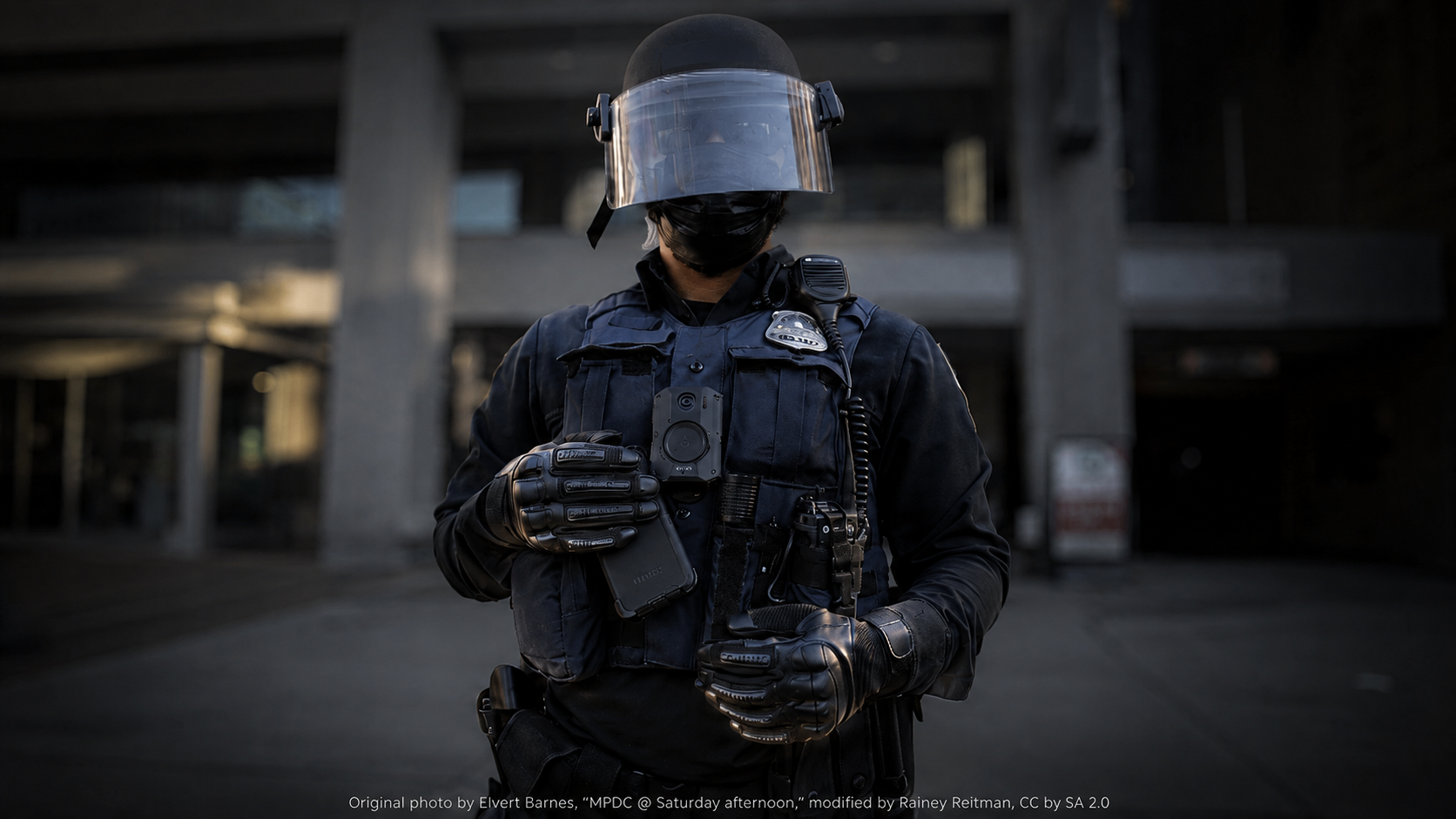
Banner image: Original photo by Elvert Barnes, “MPDC @ Saturday afternoon,” modified by Rainey Reitman, CC by SA 2.0
.jpg)