poli
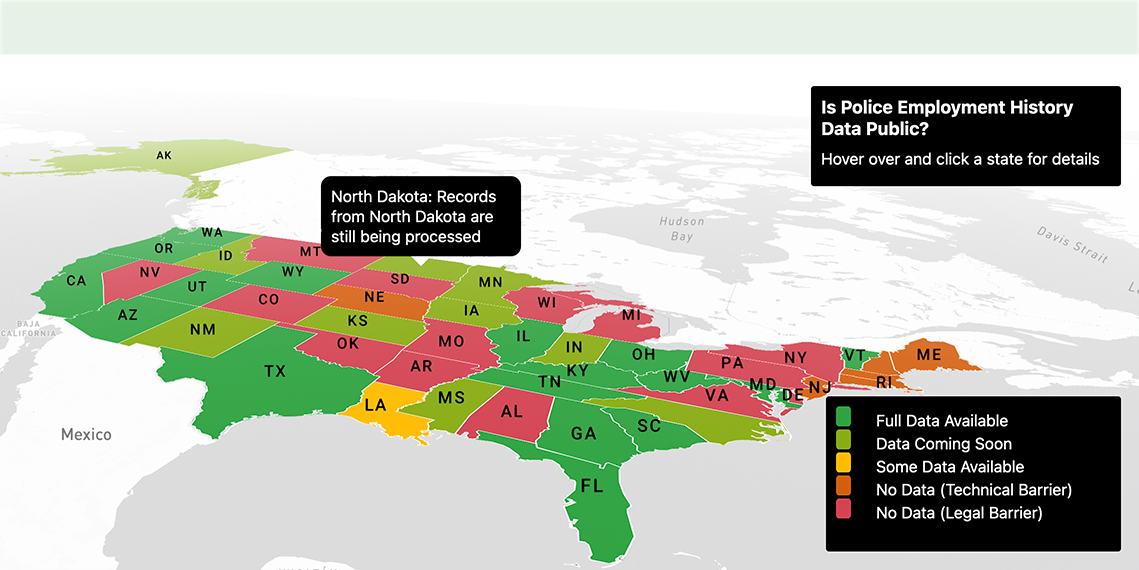
How a Data Tool Tracks Police Misconduct and Wandering Officers
Some police officers avoid accountability by “wandering” to another agency. HRDAG and partners created a data tool that tracks officers’ employment history.
How Data Extraction Illuminates Racial Disparities in Boston SWAT Raids
Boston Police deployed SWAT teams disproportionately to Black neighborhoods, sometimes raiding homes with young children. HRDAG extracted data revealing just how disproportionate.

How Data Processing Uncovers Misconduct in Use of Force in Puerto Rico
In Puerto Rico, some people are more likely to be victims of police violence than others. HRDAG processed a flood of data to illuminate the racial bias.

How Data Analysis Reconsiders Deaths During Arrest
The US Bureau of Justice collects information on deaths during arrest, and HRDAG determined the efforts were incomplete. The conclusion: Approximately one third of all Americans killed by strangers are killed by police.