How Processing Body-Worn Camera Footage Led to Reform on Traffic Stops
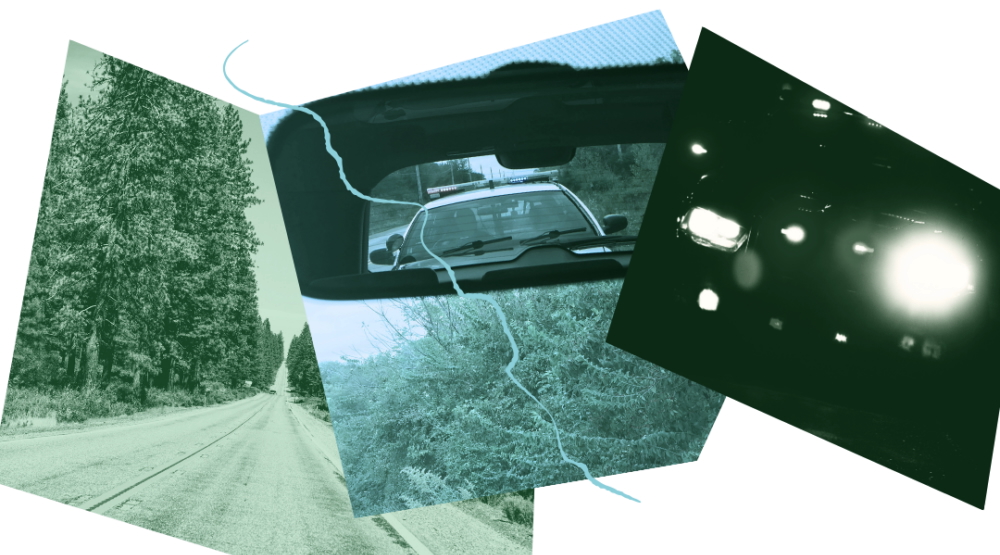 For years, Asian-American residents of Siskiyou County, in northern California, have alleged that they are being targeted by law enforcement officials through traffic stops and water access ordinances. The Asian Law Caucus and ACLU of Northern California have been fighting for the Asian-American community in Siskiyou since 2021, and in 2022, four Asian Americans in Siskiyou County, represented by the Asian Law Caucus and ACLU NorCal, filed a class action lawsuit against the county and its sheriff, alleging a campaign of harassment and intimidation.
The plaintiffs analyzed traffic stop data and found that in 2021, 28% of drivers stopped by Siskiyou County sheriff’s deputies were Asian American; Asians make up about 2% of the county’s adult population. Asian American drivers were 19 times more likely than white drivers to be searched during traffic stops, said the attorneys.
As part of the discovery motion in 2025, the ACLU of Northern California received a hard drive containing about 6,500 videos from the body-worn cameras (BWCs) of police officers doing traffic stops—and that’s where HRDAG came in. The ACLU did not have the capacity to process that much data-heavy footage. “For them just to search was a heavy computation lift,” says Tarak Shah, the HRDAG data scientist helping the team. He helped them to process and search the videos. “We ran transcriptions at scale,” he says.
Tarak was able to help the team identify specific stops to look into.
In December 2025, a partial settlement was reached, and it includes new restrictions on vehicle stops by the sheriff’s deputies. Part of the settlement involves the court appointing a monitor to audit compliance.
“It will be some time before the monitor is appointed and begins working,” says Tarak. “The ACLU is interested in using the data to do their own monitoring and to continue providing an independent source of monitoring and accountability going forward.”
HRDAG is partnering with data science practicum students at the University of San Francisco to design and test models. They’re building out types of classifiers to measure things such as how long the stop lasted; whether the officer turned on their body worn camera at the beginning of the stop; whether the officer advised the driver of why the officer had made the stop; and whether the officer offered the driver an interpreter.
“On a tech level, this is a good opportunity to advance our approach to analyzing video information at scale,” says Tarak. “That’s pretty cutting-edge.”
In some jurisdictions, police officers use a technology that writes reports based on a transcript of the BWC. Knowing this, officers sometimes narrate action for the recording as events unfold—being able to analyze video information would take this work to a new level, because it would allow analysts to compare what the video shows to what the officers were saying out loud and what became the written narrative in reports.
Further reading
Asian Law Caucus. 29 December, 2025.
Siskiyou County Settles Claims over Race-Based Traffic Stops, Agrees to Major Reform
The Guardian. Dani Anguiano. 13 January, 2026.
California county accused of profiling Asian Americans agrees to police reforms
Acknowledgments
This work was supported by the Ford Foundation, Filecoin Foundation for the Decentralized Web, Heising Simons Foundation, and MacArthur Foundation.
Image: With thanks to ACLU-NorCal
See more from Applying machine learning to make sense of massive caches of data